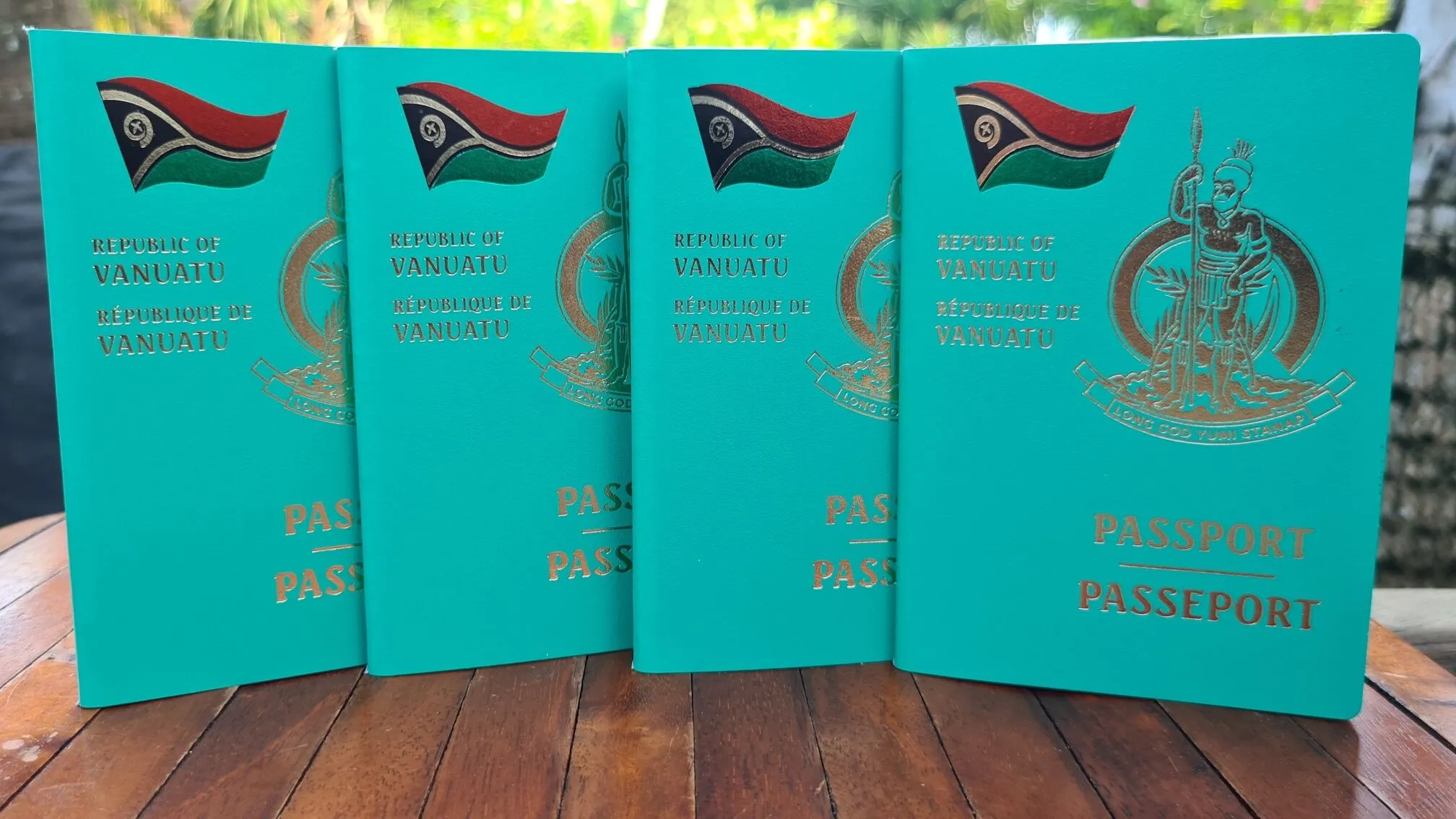
An Egyptian business consultant in Cairo received notification in January 2026 that a Gulf contract required visa-free Caribbean access within 90 days. His Egyptian passport required pre-approved visas for most jurisdictions his clients operated in, adding weeks to each travel arrangement. He applied for Vanuatu citizenship through the Development Support Programme on February 1st and held his Vanuatu passport by March 28th—57 days later—without leaving Egypt or maintaining any physical presence requirement.
Vanuatu citizenship for Egyptians in 2026 comes through one channel: the Development Support Programme. This citizenship by investment pathway, authorized under the Vanuatu Citizenship Act, requires a non-refundable $130,000 contribution, processes applications in roughly 2 months, and imposes no residency requirement at any stage. Egyptian citizens keep their Egyptian nationality throughout—Egypt permits dual citizenship with prior notification to Egyptian authorities. The Vanuatu Citizenship Office alone administers applications; no international organization like INTERPOL or regional court has involvement.
Development Support Programme (DSP) – a citizenship through economic contribution mechanism established under the Vanuatu Citizenship Act, enabling foreign nationals to acquire full Vanuatu citizenship and passport rights in exchange for a non-refundable financial contribution to designated national development projects, with no residency, language testing, or in-country interview requirements at any point in the application timeline.
Citizenship by investment – a legal category of naturalization whereby a sovereign state grants full citizenship and nationality to a qualifying applicant based on substantial economic contribution (typically a government donation, real estate purchase, or business investment), distinct from residence-by-investment programs that confer only temporary or permanent residence status without nationality rights.
The Development Support Programme stands as the sole viable legal route for Egyptian citizens to obtain Vanuatu citizenship in 2026. All naturalization procedures fall under the Vanuatu Citizenship Act, and citizenship grants issue exclusively from Vanuatu's domestic authorities—the Vanuatu Citizenship Office. No pathway exists through INTERPOL, the European Court of Human Rights, or EU legal instruments. Vanuatu is a sovereign Pacific nation outside European Union jurisdiction and not subject to ECHR rulings.
The Vanuatu Citizenship Office explicitly confirms that applicants from any country, including Egypt, are eligible provided they meet financial thresholds, pass due diligence background checks, and satisfy good character requirements. Egyptian nationals apply through authorized agents who submit documentation directly to the office. What follows is systematic: the office conducts background verification, reviews police clearances from every jurisdiction where the applicant lived for more than 6 months in the preceding 10 years, and assesses medical certificates.
Approval hinges on three core factors. First, demonstrating lawful source of funds for the $130,000 contribution—Vanuatu's Financial Intelligence Unit scrutinizes bank records and fund transfer documentation. Second, absence of criminal convictions or adverse background findings. Third, good health status ensuring the applicant does not pose a public health risk or become a public charge. If the background check reveals issues, the due diligence fee is non-refundable, but the $130,000 contribution is held pending appeal or denied outright.
Yes. Section 13C of the Vanuatu Citizenship Act, amended in 2016, formalized economic citizenship pathways and explicitly authorizes the DSP. Egyptian nationals face zero nationality-based restrictions; the Vanuatu Citizenship Office's published eligibility criteria reference "applicants of any nationality" with no country-specific exclusions. The program operates as state-sanctioned infrastructure and social development financing—citizenship conferred through the DSP carries identical legal status to citizenship acquired by birth or standard naturalization.
Dual citizenship is permitted by Vanuatu law without restriction—Vanuatu does not require applicants to renounce their Egyptian nationality. Egyptian law, however, requires notification: Presidential Decree 2004/252 mandates that Egyptian citizens inform the Ministry of Interior before acquiring a second nationality. Non-notification may result in administrative fines or complications with Egyptian passport renewal. Egyptian citizenship is not automatically revoked solely due to acquiring Vanuatu nationality, but complications can arise during travel or document applications if the government discovers undeclared dual status.
Completely. Zero residency requirement applies at any stage—before filing, during the due diligence and approval period, or after receiving the citizenship certificate. Egyptian applicants are not required to visit Vanuatu at all. The entire application is submitted and processed remotely through authorized agents. The oath of allegiance, historically administered in person, can be taken via video conference or at the nearest Vanuatu consulate; Egyptian applicants typically complete this step online from their home or office.
After citizenship is granted, no minimum stay or periodic visit obligation exists. Vanuatu citizenship confers full nationality rights including right of abode, but holders are free to reside anywhere globally. This differs sharply from residence-by-investment programs in other jurisdictions that impose annual minimum stay requirements (30 days in Portugal, 90 days in Malta) to maintain status. For Egyptian business professionals, investors, or families seeking a second passport solely for travel flexibility and business access, Vanuatu's zero-residency model eliminates logistical constraints entirely.
A single Egyptian applicant pays a total of $135,500. Here's the breakdown: $130,000 non-refundable DSP contribution plus $5,500 in government-levied processing and due diligence fees. The $130,000 is never refundable, even if the application is denied following due diligence review. The $5,500 covers initial due diligence background checks ($5,000) and administrative processing by the Vanuatu Citizenship Office ($500).
Family applications cost more. A married couple (main applicant plus spouse) pays approximately $150,000 in total DSP contributions. A family of four (two adults, two dependent children) pays approximately $180,000 in DSP contributions. Each additional dependent—whether a child, elderly parent, or other qualifying dependent—adds roughly $15,000 to the DSP contribution. Due diligence fees scale too: $5,000 per additional adult over 18 and $2,500 per child under 18. All fees are due upfront or split into two payments: initial due diligence at submission, and the balance upon approval in principle.
Egyptian families considering Vanuatu citizenship should budget the full $135,500 for a single applicant or approximately $180,000 for a family of four. Know that all fees due upfront or in two installments—and the $130,000 contribution is non-refundable regardless of outcome.
The $130,000 contribution is a one-time, non-refundable payment to the Vanuatu government. It funds national development: infrastructure upgrades (ports, roads, telecommunications), education facility construction, healthcare system expansion, and renewable energy installations across Vanuatu's archipelago. This is not an investment expecting returns; it is a direct transfer that qualifies you for expedited citizenship processing under the DSP framework.
Payment typically occurs in two phases: a $5,000 due diligence deposit submitted with the application, and the remaining $130,000 contribution plus final processing fees paid after approval in principle. Funds must transfer from a bank account in your name or a closely related entity (family trust, wholly owned company) with transparent beneficial ownership documentation. Vanuatu authorities conduct enhanced due diligence on fund origins to ensure compliance with anti-money laundering regulations and to verify that contributions do not derive from proceeds of crime, corruption, or sanctioned activities. If authorities flag fund sources as suspicious, the application stalls and the due diligence fee is forfeited.
Several mandatory and optional costs apply beyond the $130,000 DSP contribution. The $5,000 initial due diligence fee is paid at application submission and covers background verification by Vanuatu's Financial Intelligence Unit and international compliance partners. Government processing fees of $500 for a single applicant are paid upon approval in principle.
Third-party costs include police clearance certificates from Egypt and any other country where you lived for more than 6 months in the past 10 years (typically $50–$150 per certificate depending on the issuing country). Medical examination fees run $200–$500 for a comprehensive health assessment by a licensed physician; Vanuatu does not require examination from a specific clinic, but the examiner must be registered and able to certify medical fitness. Document translation and notarization costs apply if original documents are not in English (roughly $30–$100 per document). If you use an authorized agent to coordinate the application, agent fees typically range $2,000–$5,000 depending on the agent's scope and your case complexity.
Vanuatu's Development Support Programme has no published minimum net-worth threshold beyond the contribution itself. What matters is this: you must prove the $130,000 came from lawful, verifiable income or assets. Bank statements showing the transfer to the Vanuatu government account are the starting point. Then you layer in documentation of where that money actually came from—employment contracts, business ownership records, property sale paperwork, inheritance documents, investment statements.
Bank statements need to cover the past 3 to 6 months and must be certified by your bank. Here's what happens next: if your account suddenly shows a large deposit right before application, authorities will ask you to prove where that deposit came from (a property sale agreement, a gift deed, business profit distributions). They're looking for transparency and traceability. The practical reality is this—applicants with clean, well-documented fund origins move through quickly. Those with murky financial histories face extended review or requests for additional paperwork that can add weeks to processing.
Start with a valid Egyptian passport—it needs at least 6 months remaining validity. Add birth certificates (originals or certified copies from Egyptian civil registry) for yourself and all dependents. Police clearance certificates from Egypt and every country where you've lived more than 6 months in the past 10 years are mandatory. You'll also need a medical examination certificate from a licensed physician (covering HIV/AIDS, tuberculosis, general health), bank statements proving your $130,000 came from lawful sources, proof of address (utility bill, lease, property deed), and passport photos meeting ICAO standards (white background, neutral face, no glasses).
Any document not originally in English must be translated by a certified translator and authenticated. Egyptian documents specifically require legalization by Egypt's Ministry of Foreign Affairs, then authentication at the Vanuatu consulate with jurisdiction over Egypt. This two-step process typically adds 2 to 4 weeks, so start document collection early rather than waiting until you've engaged an agent. Delay here directly delays your entire timeline.
Egypt's Ministry of Interior or authorized regional police departments issue these certificates. If you're in Egypt, go in person to your nearest police headquarters with a national ID card, completed application form, and processing fee (typically EGP 50-100). You'll have it within 1 to 2 weeks. If you're abroad, contact the Egyptian embassy or consulate in your country of residence—expect 4 to 8 weeks from there.
The certificate must be recent (issued within 6 months of your application). If it's in Arabic, get it translated to English by a certified translator, then legalized by Egypt's Ministry of Foreign Affairs and authenticated by the Vanuatu consulate. Important: if you've ever held residency or citizenship elsewhere—a Gulf state where you worked, for instance—you must obtain police clearances from those countries too, each following its own procedures. That's another 4 to 8 weeks per jurisdiction.
Mandatory for all applicants and dependents aged 12 and older. The exam must include HIV/AIDS testing, tuberculosis screening (chest X-ray or interferon-gamma release assay), and a general health assessment (cardiovascular function, infectious disease history, current medications). Your physician completes a standardized form provided by your agent or the Citizenship Office, signs and stamps it, and attaches lab test results.
The certificate must be fresh—issued within 3 months of application submission. You can use any licensed private clinic or hospital in Egypt; the physician doesn't need Vanuatu accreditation. If completed in Arabic, have it translated to English and notarized. One catch: the good character requirement includes health standards. Applicants with serious communicable diseases that pose public health risk, or chronic conditions requiring long-term state-funded care, may face extra scrutiny or requests for documentation showing you won't become a burden on Vanuatu's healthcare system.
Yes. Proof of lawful funds is mandatory—it's core due diligence. Acceptable documentation: bank statements (past 6 months showing balances and transactions), employment contracts and salary slips, business ownership documents (commercial registration, tax filings, audited financials), property sale agreements if funds came from real estate, inheritance documents and probate certificates, or gift deeds with evidence of the donor's own lawful income.
Business owners face extra scrutiny—your company's financial records get examined to confirm profits are legitimate and tax-compliant. Self-employed professionals (doctors, engineers, consultants) provide client contracts, invoices, and professional licensing proof. Vanuatu's Financial Intelligence Unit cross-references everything against international sanctions lists (OFAC, UN, EU), politically exposed persons databases, and adverse media. The pattern: applicants with straightforward income (salaried employees, licensed professionals, documented family wealth) typically clear due diligence in 2 months. Those with complex international structures or large cash transactions face longer review and additional documentation requests.
The timeline breaks into six phases. Phase one covers eligibility assessment and document prep (1 to 2 weeks). Phase two is application submission and the initial $5,000 due diligence fee. Approval in principle follows within 2 weeks. Next comes payment of the remaining $130,000 plus final fees. Then due diligence background checks and citizenship certificate issuance (1 to 4 weeks after payment). Finally, oath administration and passport delivery (1 to 2 weeks). Total elapsed time from document prep to holding your Vanuatu passport: 8 to 10 weeks if nothing complications arise.
Step 1: Preliminary eligibility check and document preparation (1-2 weeks). Engage an authorized agent. They'll confirm you meet basic criteria—no serious criminal record, lawful fund sources, good health. They hand you a document checklist and guide you through obtaining police clearances, medical certificates, and financial documentation. Budget 2 to 4 weeks for police clearance issuance and document legalization, which typically happens while you're working with the agent.
Step 2: Application submission and initial due diligence fee payment. Your agent compiles everything—certified passport copies, birth certificates, police clearances, medical certificates, financial documents, proof of address—and submits electronically to the Vanuatu Citizenship Office. You pay the $5,000 initial due diligence fee via bank transfer to a designated government account. The office acknowledges receipt within 2 to 3 business days and assigns you a reference number.
Step 3: Approval in principle (within 2 weeks of submission). The Citizenship Office does a preliminary review to confirm all documents are present, legible, and properly authenticated. If you pass and nothing raises immediate concerns, you get an approval in principle—formal notice that you're conditionally approved subject to due diligence clearance and full DSP payment. This stage typically takes 10 to 14 days from submission.
Step 4: Full DSP contribution payment and due diligence completion (1-4 weeks). Once you have approval in principle, transfer the remaining $130,000 DSP contribution plus $500 processing fee to the government account. Vanuatu's Financial Intelligence Unit then runs enhanced due diligence—checking your identity and financial history against international sanctions lists (OFAC, UN, EU), politically exposed persons databases, and adverse media. For straightforward applicants, this takes 1 to 2 weeks. For those with complex international business or previous high-risk residency, plan on 4 weeks. After due diligence clears, you receive your citizenship certificate and a formal citizenship letter confirming your legal status as a Vanuatu citizen.
Step 5: Oath of allegiance administration. Egyptian applicants must take an oath of allegiance to Vanuatu before citizenship becomes official and a passport can be issued. You'll do this via video conference with a Vanuatu Citizenship Office representative, or in person at the nearest consulate if that's more practical for your situation. The ceremony itself is brief—roughly 10 minutes. You'll read a prescribed text affirming loyalty to Vanuatu and compliance with its laws while the administering official countersigns your oath certificate. Scheduling typically happens within 2 to 5 business days after you receive your citizenship certificate.
Step 6: Passport processing and delivery (1-2 weeks). Once you've taken the oath, the Citizenship Office sends your details to Vanuatu's passport authority. Passports print within a week and ship via secure courier (DHL, FedEx) to your address or for collection at the nearest consulate. If you're in Cairo or Alexandria, expect delivery 10 to 14 days after the oath ceremony. Your new passport is valid for 10 years (5 years if you're under 16) and renews through Vanuatu consular services anywhere in the world.
Start to finish—from submitting a complete application to holding your passport in hand—takes roughly 2 months, or 8 to 10 weeks if nothing unusual emerges. Here's where the time goes: 2 weeks for approval in principle, 1 to 2 weeks for due diligence after you pay, 3 to 5 days to schedule and complete the oath, and 1 to 2 weeks for the passport to arrive. Applications flagged for extended due diligence—politically exposed persons status, prior residence in high-risk jurisdictions, complex financial structures—can stretch to 12 to 16 weeks, though fewer than 10% of cases hit this timeline based on industry reporting.
That 2-month window makes Vanuatu one of the fastest citizenship-by-investment programs available. Saint Kitts and Nevis, Dominica, and Antigua and Barbuda typically need 3 to 6 months. Malta and Austria run 12 to 36 months. Here's what this means for you: if you need visa-free Caribbean access or a fast entry to Pacific markets, Vanuatu's speed solves a real timing problem that slower programs cannot.
Two things happen immediately. You must pay the full DSP contribution ($130,000 plus final fees) and submit to enhanced due diligence. You typically have 30 days from your approval-in-principle letter to transfer funds—miss this window and your approval expires. Your authorized agent gives you the bank details, SWIFT codes, and payment reference. Critically: the money must come from your declared source-of-funds account. If a friend, business partner, or unrelated party sends it, the application gets rejected unless you provide legal documentation (a gift deed or loan agreement).
During due diligence, Vanuatu's Financial Intelligence Unit may call your bank to verify your account, contact professional licensing bodies if you're a doctor or lawyer, and review corporate records if you own a business. Your agent handles any follow-up questions. Applicants who submit thorough, well-organized paperwork upfront rarely see additional requests. Those with gaps or unclear records face 1 to 3 extra weeks of back-and-forth, depending on how quickly they respond.
Most Egyptian applicants do this via video conference. Your authorized agent schedules a call (Zoom, Teams, or a Vanuatu Citizenship Office platform) between you and a Citizenship Office representative or consular officer. You appear on camera, present your Egyptian passport and Vanuatu citizenship certificate for verification, and read the oath script—roughly 100 words affirming your commitment to uphold Vanuatu's laws and Constitution.
Five to 10 minutes total. The official countersigns your certificate and emails a scanned copy back to you; the original goes to the Citizenship Office. That digital copy, paired with your citizenship certificate, proves you're a citizen. You don't need to travel to Vanuatu or find a consulate unless you prefer an in-person ceremony. The video option means you complete this final step from your home or Cairo office.
Your passport ships via secure courier (DHL or FedEx) directly to your Egyptian address, or you can collect it at the nearest Vanuatu consulate if you prefer. Delivery to Cairo, Alexandria, or other Egyptian cities takes 5 to 10 business days from dispatch. Your agent provides tracking so you can watch it arrive in real time.
Consular collection works if you're traveling internationally during passport production and want to grab it en route. Either way, the passport name must match your Egyptian passport and citizenship certificate exactly—no spelling variations allowed. Mismatches delay issuance and create friction when immigration systems scan your travel documents.
A Vanuatu passport opens visa-free or visa-on-arrival doors to roughly 90 countries and territories, compared to Egypt's 50. That includes Russia, Hong Kong, Singapore, Malaysia, the Philippines, most Caribbean nations, and Pacific Island states. For business owners or consultants doing international work, this eliminates the administrative drag of pre-visa applications to major commercial hubs.
One caveat: Schengen Europe (France, Germany, Italy, Spain and 22 others) and the United Kingdom still require separate visas. If your business life revolves around European travel, this matters. You'll need to budget time and fees for Schengen and UK applications, though holding Vanuatu citizenship doesn't complicate those processes. For Egyptians whose primary destinations are Asia, the Caribbean, or Eastern Europe, Vanuatu's visa-free network aligns with how you actually travel.
Vanuatu imposes zero income tax, capital gains tax, inheritance tax, or wealth tax on non-resident citizens. That's meaningful if you structure international business or investments through a Vanuatu entity—you optimize tax exposure, provided you follow tax residency rules and disclosure obligations in Egypt or wherever you actually live. Vanuatu doesn't tax citizenship itself; it taxes only residents earning Vanuatu-sourced income. If you stay resident in Egypt after acquiring citizenship, Egyptian tax law applies to your worldwide income as it always has. Vanuatu adds no new obligations on top of that.
| Feature | Egyptian Passport | Vanuatu Passport (DSP) |
|---|---|---|
| Visa-free / VoA access | ~50 countries | ~90 countries |
| Schengen Area access | Visa required | Visa required |
| UK access | Visa required | Visa required |
| Income tax (non-resident) | N/A (Egyptian tax applies if resident) | 0% |
| Processing time | N/A (birthright) | ~2 months |
| Residency requirement | N/A | Zero |
| Investment required | N/A | $130,000 |
| Dual citizenship permitted | Yes (with notification) | Yes |
Your family can come along. Dependent children (up to 25 if studying full-time), elderly parents (if you support them financially), and siblings under certain conditions all qualify for Vanuatu citizenship on your application. Everyone gets full rights—passport, visa-free access, the same 10-year validity. This is how parents secure a second citizenship option for their children, opening educational and business doors as they grow. Children born after you become a citizen can register as Vanuatu citizens by descent, so citizenship extends to the next generation without fresh DSP payments.
Vanuatu citizenship does not grant European Union residency or work rights. If you need to live, work, or do business in EU member states, you need a separate residence permit or EU citizenship program (Malta, Portugal). The lack of visa-free Schengen access means short business trips or tourism in Europe still demand Schengen visa applications—2 to 4 weeks per application. For Egyptians whose professional roots are heavily Europe-based, Vanuatu's practical gain over the Egyptian passport narrows significantly in that context.
The $130,000 DSP contribution is non-refundable. Deny an application for undisclosed criminal history, fraudulent documents, or links to sanctioned entities, and you forfeit the full amount plus all fees. This means the financial risk is real—there's no safety net if due diligence uncovers problems. Egyptian applicants must be absolutely transparent and accurate in every document submitted. Concealing material facts (prior arrests, ongoing litigation, business disputes) triggers immediate rejection and potential legal liability. The Vanuatu Citizenship Office and Financial Intelligence Unit use sophisticated background-check systems that cross-reference international law enforcement databases and conduct adverse media screening; attempts to hide negative information are typically detected.
Egyptian nationals acquiring Vanuatu citizenship face an additional administrative step at home. Presidential Decree 2004/252 requires you to notify Egypt's Ministry of Interior before or shortly after obtaining second nationality. Skip this notification, and you risk fines, passport renewal complications, or travel delays using your Egyptian passport. The process itself is straightforward: submit a formal letter to the Ministry of Interior with a copy of your new citizenship certificate and passport. Expect 4 to 8 weeks for processing. After that window closes, Egyptian authorities update your file to reflect dual nationality status. Future interactions with Egyptian government agencies can turn problematic if this step was missed.
Acquire Vanuatu citizenship but stay in Egypt, and your tax obligations don't budge. Egypt uses a residence-based system: live in Egypt more than 183 days per year or maintain a permanent home there, and you're a tax resident reporting worldwide income to the Egyptian Tax Authority. Vanuatu's zero-tax policy doesn't override this. Dual citizenship adds a nationality; it doesn't erase your Egyptian tax residency status.
That said, relocating permanently abroad changes the math. If you establish tax residency elsewhere—or in Vanuatu itself—Egyptian tax exposure drops. Egypt's tax treaties with various countries prevent double taxation. Demonstrate tax residency outside Egypt, file for non-resident status with the Tax Authority, and the exposure shrinks further. Vanuatu citizenship facilitates this by providing a second nationality that legitimizes residence in low-tax or zero-tax jurisdictions without requiring you to actually live there full-time. Business owners and high-net-worth individuals considering this strategy should consult tax advisors licensed in both Egypt and their target country to ensure compliance.
Military service? Vanuatu citizenship doesn't exempt you. Egyptian males aged 18 to 30 face compulsory conscription under Law 127 of 1980. Dual nationals remain subject unless they obtain formal exemption or postponement from the Ministry of Defense. Having Vanuatu citizenship alone isn't grounds for automatic waiver. If you completed service before obtaining Vanuatu citizenship, you're clear—no retroactive obligations. Haven't served yet? Consult Egyptian legal counsel about how dual nationality affects your conscription status, exemption options, or remote/alternative service pathways.
Denial comes as a formal letter stating the grounds. Common reasons: undisclosed criminal convictions, inability to prove lawful source of funds, fraudulent documentation, links to sanctioned individuals or entities, or identification as a politically exposed person with unresolved corruption allegations. The $130,000 DSP contribution is gone. Non-refundable. The $5,000 initial due diligence fee vanishes too—it covered the background checks already completed.
Believe the decision was wrong? You can request administrative reconsideration. This isn't a legal appeal; it's the Citizenship Office reconsidering its own determination. Submit a written request with additional evidence addressing the stated grounds. If reconsideration confirms the denial, that's final within Vanuatu's administrative system. Want to challenge it legally—alleging procedural unfairness or violation of Vanuatu law—you'd need to initiate judicial review in Vanuatu's courts. That requires local legal counsel and significant legal costs with no guarantee of success.
Minimize denial risk through total transparency. The most preventable denial cause? Undisclosed criminal history. Disclose everything—arrests, charges, convictions, even dismissed cases or decades-old incidents. Provide full context and documentation. Vanuatu authorities respect honesty: an applicant with a minor historical issue who discloses it fully has better approval odds than one who conceals the same issue and gets caught during due diligence. Egyptian nationals with complex financial histories or past business disputes should work closely with their authorized agent to preemptively address red flags through detailed explanatory letters and supporting evidence.
This article is published by an independent law firm for informational purposes only and does not represent or claim affiliation with any government body, international organization, or official authority.
Yes. Both countries permit it. Vanuatu has no restrictions on multiple nationalities. Egypt allows dual citizenship under Presidential Decree 2004/252, provided you notify the Ministry of Interior before or shortly after acquiring second nationality. You keep your Egyptian citizenship and all that comes with it—Egyptian passport validity, unrestricted Egyptian residency.
Ten years for adults (age 16+). Five years for children under 16. Renewal requires your expiring passport, a renewal application, updated photos, and a fee (typically $200–$300). Processing takes 4 to 6 weeks. No need to travel to Vanuatu—you can handle it through consular services worldwide or by mail.
No. Vanuatu passport holders need visas for both countries. Apply for B-1/B-2 visitor visas (USA) or visitor visas (Canada) through the respective embassy or consulate. Vanuatu citizenship offers no special visa waiver or expedited processing for North America. Where it does shine: Asia, the Caribbean, Eastern Europe, and the Pacific region.
General information only, not legal advice. Visa and programme rules change; confirm current details before deciding. Last verified 29 June 2026.
Honest, no-obligation assessment from our licensed citizenship lawyers.
Get my free assessment →