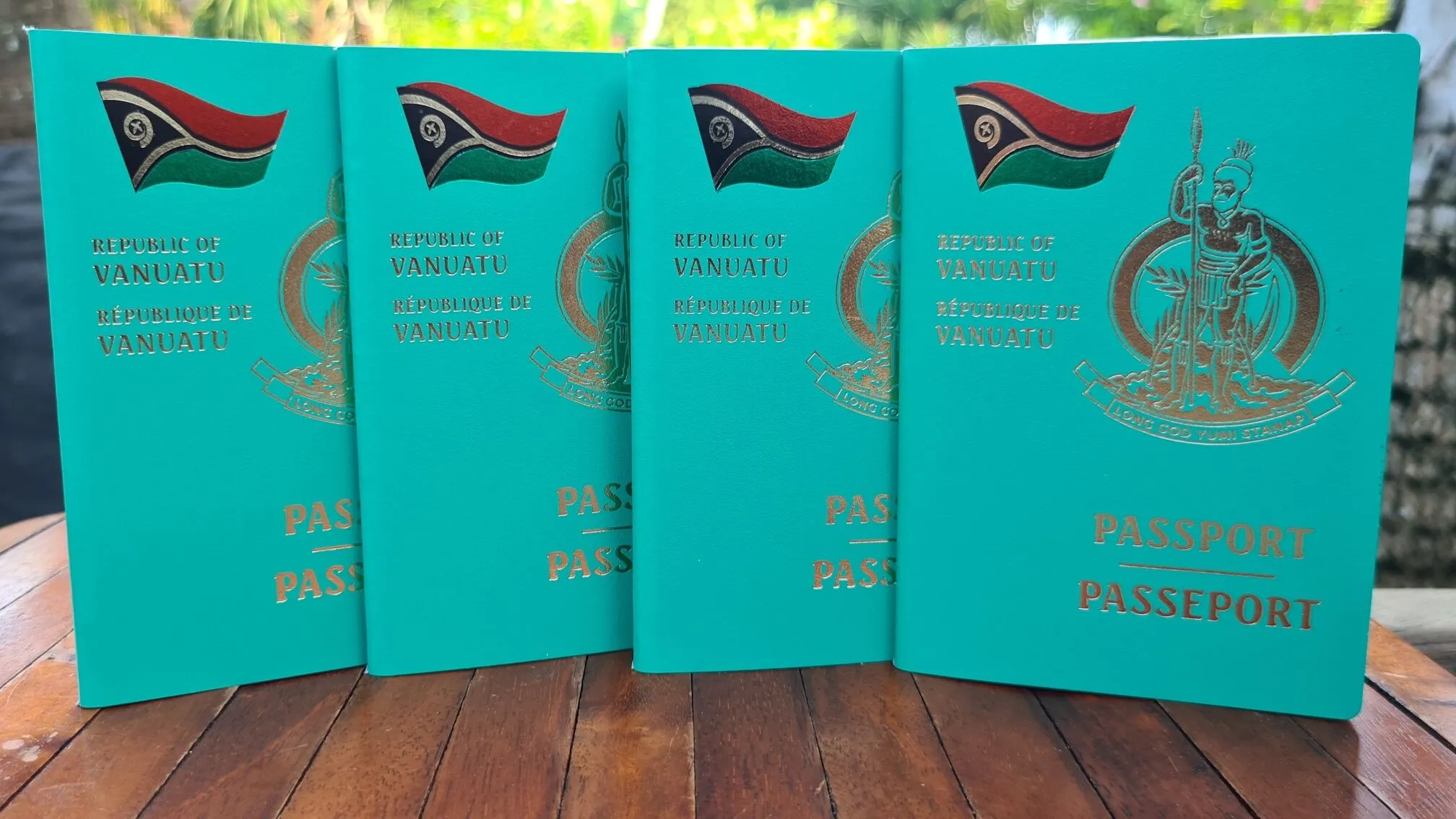
A Pakistani software entrepreneur submitted his Vanuatu citizenship application in January 2026 through a licensed Development Support Programme agent in Karachi. Within eight weeks, he held a second passport granting visa-free access to 90 countries, paid zero tax on his global consulting income, and retained his Pakistani nationality without any conflict—transforming his family's mobility and financial planning overnight.
Pakistani citizens can acquire Vanuatu citizenship by making a non-refundable $130,000 contribution to the Development Support Programme, paying a $5,500 due diligence fee, and submitting the application through a licensed DSP agent. The entire process takes roughly two months—meaning if you file in January, expect citizenship by March or April. You'll need no physical residency, no minimum net-worth threshold beyond proving lawful source of funds, and you'll retain your Pakistani passport. In return: visa-free access to 90 countries and zero taxation on foreign-source income.
Development Support Programme (DSP) – a citizenship-by-investment initiative established by the Government of Vanuatu under the Citizenship Act and Citizenship Regulations, enabling foreign nationals to obtain full citizenship and a passport in exchange for a non-refundable financial contribution that supports national infrastructure and economic development projects.
Launched in 2014, the Development Support Programme attracts foreign capital while expanding Vanuatu's diaspora. Approved applicants receive full citizenship and a biometric passport identical to those held by native-born citizens. Pakistani nationals are eligible, subject to the same due diligence checks applied to all applicants—run by the Vanuatu Financial Intelligence Unit and cross-referenced against Interpol databases.
Here's the key constraint: applications must go through a government-licensed DSP agent. Direct applications are prohibited. The agent handles documentation, liaison with the Citizenship Commission, and biometric coordination. Most Pakistani applicants work with agents in Dubai, Karachi, or Islamabad, though the entire process operates remotely—documents are couriered, and biometrics can be collected at designated facilities outside Vanuatu.
The Financial Intelligence Unit reviews files for anti-money laundering compliance, verifies the source of the $130,000 contribution, and cross-references applicants against international sanctions lists and Interpol notices. Most well-documented applications from applicants with no criminal record or financial red flags are approved, though approval is never guaranteed.
Vanuatu operates this program under its sovereign authority as an independent nation. It is not bound by EU directives, the European Convention on Human Rights, or Interpol governance structures beyond routine law enforcement cooperation. The program is codified in the Citizenship Act (Cap. 112) and has run continuously since 2014 with periodic due diligence upgrades.
International law does not prohibit citizenship-by-investment. The 1930 Hague Convention on Certain Questions Relating to the Conflict of Nationality Laws affirms each state's exclusive right to determine its nationals. Vanuatu's program is transparent, audited regularly, and complies with Financial Action Task Force customer due diligence standards. As of 2026, no international legal challenge has been mounted, and the program remains fully operational.
Vanuatu law explicitly permits dual and multiple citizenship; the Citizenship Act imposes no renunciation requirement. Pakistan's 2017 Dual Nationality Policy designates 19 approved countries—mostly Western nations: the United States, Canada, Australia, the United Kingdom. Vanuatu is not listed.
A single applicant pays $130,000 to the DSP and $5,500 to the Vanuatu Financial Intelligence Unit. For a married couple, the DSP contribution jumps to $150,000. A family of four (two adults, two children under 18) pays a fixed $180,000. Each additional dependent costs $15,000 more.
Biometric enrollment is separate. Collection in Port Vila costs $1,000 per applicant; collection at the designated Dubai facility costs $3,000 per applicant. Most Pakistani applicants choose Dubai to avoid a 20-hour flight to the South Pacific.
Licensed DSP agents charge $10,000 to $25,000 depending on family size and case complexity. These fees cover document preparation, translation, notarization, liaison, and post-approval passport courier. Reputable agents provide written fee schedules upfront in a signed retainer. Cash-only requests or refusal to itemize fees are red flags.
"A single applicant pays $135,500 in government fees ($130,000 contribution plus $5,500 due diligence); licensed-agent and biometric fees are additional and vary by provider. Passports are typically issued in about eight weeks."
| Family Composition | DSP Contribution | Due Diligence Fee | Biometric Fee (Dubai) | Total Government Cost |
|---|---|---|---|---|
| Single applicant | $130,000 | $5,500 | $3,000 | $138,500 |
| Married couple | $150,000 | $5,500 | $6,000 | $161,500 |
| Family of four | $180,000 | $5,500 | $12,000 | $197,500 |
| Each additional dependent | +$15,000 | — | +$3,000 | +$18,000 |
The $5,500 covers background checks by the Vanuatu Financial Intelligence Unit: identity verification, cross-referencing your name and biographical data against Interpol's Stolen and Lost Travel Documents database, international sanctions lists (UN and Financial Action Task Force), and a police clearance request from Pakistani authorities.
The unit also scrutinizes the source of your $130,000. You'll need bank statements, tax returns, or audited business financials proving lawful earnings. Recent large cash deposits, undocumented wire transfers, or income from high-risk sectors trigger heightened scrutiny and requests for additional documentation or attestations from accountants or lawyers.
Budget for document translation and notarization. Urdu-language birth certificates, marriage certificates, and police clearance certificates require certified English translation. Notarization by a Pakistani notary public costs roughly PKR 2,000 per document. Apostille service through the Ministry of Foreign Affairs in Islamabad adds PKR 3,000 per document and takes five to seven business days.
Medical certificates must come from a physician recognized by Vanuatu's Ministry of Health or an internationally accredited clinic. Standard health screenings—blood tests, chest X-ray, physical exam—cost $150 to $300 per person in Karachi or Lahore. Certificates expire after six months, so time your medical exam to align with final submission.
Courier fees from Pakistan to your agent or Port Vila typically run $100 to $200 via DHL or FedEx with tracking and insurance. Return courier of your final passport adds another $150. Small expenses in context, but part of the true all-in cost.
Every Pakistani applicant aged 18 or older must submit a police clearance certificate obtained from the National Database and Registration Authority or directly from the nearest police station with jurisdiction over the applicant's permanent address. The certificate must be dated within the past six months and bear an original signature and official stamp, then be notarized and apostilled by the Ministry of Foreign Affairs before submission.
Your passport needs at least 12 months of remaining validity along with a clear color scan of the biographic data page. You'll also provide a copy of your Computerized National Identity Card. Married applicants or those including dependents must submit a marriage certificate and birth certificates for all children—each translated into English, notarized, and apostilled.
Proof of lawful source of funds is mandatory. The $130,000 contribution must be traceable. Acceptable documentation includes six months of personal or corporate bank statements showing the origin of funds, audited financial statements for business owners, signed sale agreements for real estate or other assets, inheritance documents, or signed letters from employers for salaried professionals. The Vanuatu Financial Intelligence Unit publishes no minimum net-worth or liquid-asset threshold—only that the contribution amount came through lawful means. This distinction matters: you're not proving wealth, only that the money itself is clean.
A medical certificate issued by a licensed physician on official letterhead completes the package. It must confirm freedom from contagious diseases and general good health, include the physician's license number and clinic stamp, and be dated within six months of submission.
Two channels exist. The National Database and Registration Authority online portal processes applications in 7 to 14 business days and delivers by courier. You upload scanned CNIC and passport copies, pay PKR 500, and receive a digitally signed certificate suitable for international use.
Local police stations offer a second route. Submit a written request on plain paper with photocopies of your CNIC and passport; the station runs a background check through the Central Police Office database. Processing takes 10 to 21 days depending on workload. The certificate must be signed by a Deputy Superintendent of Police or higher to be accepted by Vanuatu authorities. What stops many applicants here: stations sometimes lose files or demand additional visits. File in person, get a receipt with a case number, and follow up at the one-week mark if nothing has moved.
Once issued, have the certificate notarized by a notary public registered with the Pakistan Bar Council, then send it to the Ministry of Foreign Affairs Attestation Branch in Islamabad or the Karachi regional office for apostille under the Hague Convention. Total elapsed time from initial application to apostilled certificate: three to four weeks. The apostille confirms authenticity for use in Vanuatu, which is a 1961 Hague Convention signatory.
Vanuatu requires a chest X-ray to screen for tuberculosis, basic blood work to rule out communicable diseases such as HIV and hepatitis, and a physical examination documenting height, weight, blood pressure, and any chronic conditions. The physician completes a standardized medical form provided by your DSP agent, declaring that you pose no public health risk.
Major hospitals in Karachi, Lahore, and Islamabad—those accredited by international bodies or recognized by foreign embassies for visa exams—are approved. Pakistani applicants submitting biometrics in Dubai may complete the medical examination at clinics approved by Vanuatu's Honorary Consulate in the UAE instead. Costs run $150 to $250 per person; certificates from either location are accepted equally.
Here's a timing trap: medical certificates expire after six months. If your application stalls due to requests for additional documentation or administrative delays, you'll need a fresh certificate before final approval. Budget accordingly—don't schedule the medical exam on day one.
Eight to ten weeks. That's the span from initial consultation with a licensed DSP agent to holding a Vanuatu passport, assuming complete documentation, prompt payment, and no adverse due diligence findings in 2026. The process unfolds in six distinct phases.
Week one or two: consultation and document gathering. Your agent reviews eligibility, provides a document checklist, and answers process questions. You collect police clearances, medical certificates, financial documents, and certified identity papers during this window.
Phase two spans roughly two weeks. Once documents are ready, your agent compiles the application file and submits it to the Vanuatu Citizenship Commission with a $5,000 initial due diligence payment. Within 14 days, you receive approval in principle—a preliminary clearance indicating no immediate disqualifying factors and an instruction to remit the full $130,000 contribution plus a remaining $500 due diligence balance.
Phase three takes approximately two weeks. Upon receipt of the full investment amount, the Citizenship Commission forwards your file to the Vanuatu Financial Intelligence Unit for comprehensive background checks. If they request clarification or additional documents, the timeline extends accordingly; most Pakistani applicants pass this stage without complication.
Phase four: citizenship grant. Once due diligence is complete and the Prime Minister's office countersigns approval, you receive a citizenship certificate by email, typically within two weeks of final payment. This certificate is legal proof of Vanuatu citizenship and can be used immediately for certain purposes, though the passport is required for international travel.
Phase five is biometric enrollment and oath of allegiance. You schedule an appointment at the biometric facility in Dubai or travel to Port Vila to provide fingerprints, a digital photograph, and a signature. At the same session, you take the oath of allegiance before a consular officer or government-authorized notary. Less than one hour total.
Phase six: passport issuance. The Vanuatu passport is printed and dispatched by secure courier within three to four weeks of the oath ceremony. Valid for ten years and renewable indefinitely. Total elapsed time from initial document submission to holding the passport averages 60 to 70 days for Pakistani applicants in 2026.
| Phase | Activity | Duration |
|---|---|---|
| 1 | Consultation and document collection | 1–2 weeks |
| 2 | Application submission and approval in principle | 2 weeks |
| 3 | Full payment and due diligence review | 2 weeks |
| 4 | Citizenship certificate issued | 2 weeks |
| 5 | Biometric enrollment and oath | 1 day |
| 6 | Passport printing and delivery | 3–4 weeks |
| Total | 8–10 weeks |
Vanuatu's eight-to-ten-week timeline ranks among the fastest in citizenship-by-investment globally. Caribbean programs—Dominica, Saint Kitts and Nevis—typically require three to four months from application to passport. European options like Malta's stretch to 12 to 36 months due to mandatory residency periods and stricter due diligence.
Turkey processes applications in four to six months but requires a $400,000 real estate purchase or $500,000 bank deposit. Austria and Cyprus offer EU mobility benefits but demand investments exceeding €2 million and processing times beyond two years.
For Pakistani nationals wanting speed and affordability, Vanuatu stands out. No physical residency requirements, language tests, or in-person interviews accelerate the process further. The government's 2025 digitized application system streamlines everything.
Vanuatu law prohibits direct citizenship applications; all DSP submissions must route through an agent licensed by the Vanuatu Financial Services Commission. This requirement functions as quality control, ensuring applications are complete, due diligence is properly conducted, and agents have a financial and reputational stake in program integrity.
Licensed agents undergo annual audits, maintain professional indemnity insurance, and must demonstrate anti-money laundering compliance expertise. They serve as the official intermediary between you and the Citizenship Commission, submitting documents, paying government fees, and receiving official communications. An agent's license gets revoked for submitting fraudulent documentation, failing to conduct adequate due diligence, or violating ethical standards.
Before signing any retainer agreement, verify your agent's license status through the Vanuatu Financial Services Commission's public register—updated quarterly on their official website. Any agent promising "fast-track" citizenship outside the official DSP framework or approval without due diligence is operating unlawfully and should be avoided entirely.
Start with the official registry published by the Vanuatu Financial Services Commission. Several licensed agents operate offices or representative partnerships in Pakistan, Dubai, and Singapore—cities with significant Pakistani expatriate populations as of 2026. Reputable agents provide a physical office address, a signed fee agreement detailing all government and service charges, and verifiable client testimonials.
Watch for agents demanding cash payments, refusing written contracts, or promising citizenship approval as a certainty. Red flags also include claims of "special government connections" that somehow bypass the standard review process. Here's what you need to know: all DSP applications are processed identically. Your agent's connections don't matter. There is no premium tier, no back channel, no way to jump the line.
During your first conversation with an agent, ask directly: How many Pakistani applications have you closed? What's your median processing time? Will I have a named case manager I can reach? Do you carry errors and omissions insurance? Can you help after citizenship arrives—banking introductions, tax advisory, passport renewal?
For Pakistani nationals, the primary draw is visa-free travel. The Pakistani passport ranks near the bottom of global mobility indexes—fewer than 35 countries grant visa-free or visa-on-arrival entry. Vanuatu changes that. Its passport opens roughly 90 destinations without advance arrangements: Russia, Singapore, Hong Kong, Malaysia, the Philippines, most of the Caribbean. For someone who travels frequently to Asia, the Middle East, or the Pacific, this difference is material.
Tax treatment matters equally. Vanuatu levies zero personal income tax, zero capital gains tax, zero wealth tax, zero gift or inheritance tax. Non-resident or resident, you pay nothing on worldwide income. No foreign exchange controls either—move money in and out freely. This appeals to business owners, investors, and professionals earning across multiple jurisdictions.
Business and investment in the Pacific becomes easier. Vanuatu citizens own land, register companies, and open bank accounts under preferential terms. The country sits inside the Pacific Islands Forum and maintains free trade agreements with Australia and New Zealand, lowering barriers to regional commerce.
For families, it's insurance. If Pakistan faces political instability, currency collapse, or economic turmoil, you have an exit route. Children born to Vanuatu citizens acquire citizenship automatically—a benefit that compounds across generations. Education doors open too. Commonwealth scholarship schemes and student visas to Australia, New Zealand, and the UK become easier; Pakistani passport holders typically face higher scrutiny in these applications.
No. Vanuatu passport holders cannot enter the Schengen Area, the United Kingdom, or Ireland without a visa. You'll apply through the standard process—the same requirement facing Pakistani nationals, except processing is often faster (around 15 calendar days for Schengen visas) and approval rates are higher. But you still pay the fee and wait.
Visa-free entry within Europe is limited to Albania and Kosovo. Russia offers 90 days visa-free, a real advantage if you travel frequently to Russia, Central Asia, or Southeast Asia. If Europe is your primary travel destination, Vanuatu citizenship delivers less value than it does for Asia-focused entrepreneurs.
None. Zero residency requirements before, during, or after approval. You never have to visit. The sole in-person obligation is biometric enrollment and the oath ceremony—completable in Dubai for Pakistani applicants, so you might arrange it around another trip.
No language test. No history exam. No cultural integration requirement. Citizenship depends only on the financial contribution and passing due diligence. Once granted, it's permanent except in cases of fraud or treason—scenarios extremely unlikely for investors.
After you receive the passport, there are no annual taxes, reporting demands, or visa-free travel restrictions tied to residency. Renewal happens every ten years through routine paperwork, by mail or through a consular office. Vanuatu doesn't tax its citizens on worldwide income, so the passport creates no new fiscal obligations wherever you live.
This article is published by an independent law firm for informational purposes only and does not represent or claim affiliation with any government body, international organization, or official authority.
A single applicant pays $135,500 in government fees: $130,000 as a non-refundable contribution to the Development Support Programme and $5,500 for due diligence by the Vanuatu Financial Intelligence Unit. Expect another $3,000 for biometrics in Dubai, $10,000 to $25,000 for the licensed agent, and $500 to $1,000 for document translation, notarization, apostille, and medical certificates. Total: roughly $135,500 in government fees, plus variable agent and biometric costs.
Yes. Vanuatu explicitly permits dual citizenship without renunciation of your prior nationality. Pakistan's 2017 Dual Nationality Policy lists 19 enumerated countries but doesn't prohibit dual citizenship with Pacific island nations. In practice, Pakistan generally permits dual citizenship; use your Pakistani passport for Pakistani border crossings, as Pakistan does not recognize a foreign passport for its own nationals.
Eight to ten weeks from submission to passport in hand. That breaks down roughly as: two weeks to approval in principle, two weeks for financial intelligence clearance, two weeks for the citizenship certificate, and three to four weeks for passport printing and courier delivery after your oath ceremony. If delays occur at the due diligence stage—which happens when financial history is complex or when the FIU requests additional documentation—expect timelines to stretch toward twelve weeks.
No. Zero residency requirements exist at any stage. You're never required to visit before citizenship is granted, and there's no obligation to reside, work, or hold property afterward. Your only in-person appearance is the biometric enrollment and oath ceremony, which takes place in Dubai.
Vanuatu grants visa-free or visa-on-arrival access to approximately 90 countries: Russia, Singapore, Hong Kong, Malaysia, the Philippines, and most Caribbean nations—substantially more than the fewer than 35 destinations available to Pakistani passport holders. Schengen countries, the United Kingdom, and Ireland are not included and require visas.
Yes. Vanuatu's citizenship-by-investment program is authorized under the Citizenship Act and operates under sovereign authority. International law contains no prohibition on citizenship by investment. Pakistani law doesn't expressly forbid acquiring a second nationality outside the 19 enumerated countries in the 2017 Dual Nationality Policy.
General information only, not legal advice. Visa and programme rules change; confirm current details before deciding. Last verified 29 June 2026.
Honest, no-obligation assessment from our licensed citizenship lawyers.
Get my free assessment →