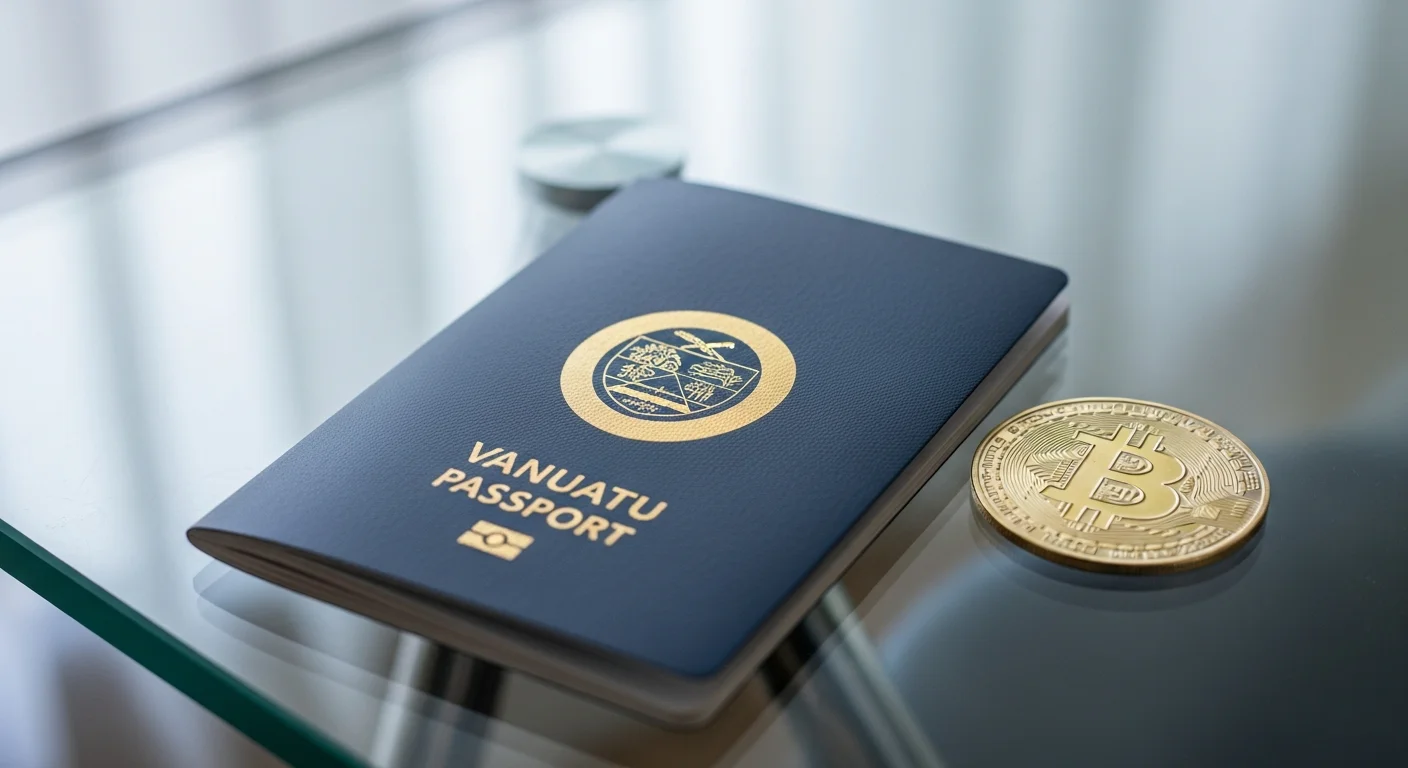
A Turkish tech entrepreneur based in Istanbul submitted his Vanuatu citizenship application in January 2026, paid the $130,000 contribution and full fees remotely, and received his Vanuatu passport by early March without ever visiting the country. His new second citizenship gave him visa-free access to 90+ destinations his Turkish passport alone could not reach, with zero ongoing tax or residency obligations.
Turkish citizens can obtain Vanuatu citizenship through the Development Support Programme (DSP) by making a non-refundable contribution of $130,000 to the National Development Fund, completing due diligence screening, and taking an oath of allegiance remotely. The entire process takes 1–2 months and requires no physical residency in Vanuatu or travel to the country. Turkey permits dual citizenship, so you retain your Turkish nationality throughout.
Development Support Programme (DSP) – the official citizenship by investment program administered by the Vanuatu Citizenship Commission under the Citizenship Act, allowing foreign nationals to acquire Vanuatu citizenship through a qualifying non-refundable contribution to the National Development Fund without residency requirements.
The Development Support Programme grants Vanuatu citizenship to foreign investors who make a non-refundable contribution to the National Development Fund under the Vanuatu Constitution and Citizenship Act. The Vanuatu Citizenship Commission reviews applications based on recommendations from the Internal Screening Committee, which conducts background checks independently. No international bodies—Interpol, the European Court of Human Rights—regulate or administer this sovereign citizenship program.
Turkish applicants follow the same pathway as other foreign nationals: submit documents through an authorized DSP agent, pay the contribution and processing fees, pass background screening, take the oath of allegiance. The non-refundable contribution model differs fundamentally from residency-based citizenship. You receive citizenship based on your investment and clean background, not on years of physical presence or cultural integration tests.
The absence of a residency requirement appeals especially to Turkish citizens who cannot relocate but want a second passport for travel flexibility, business expansion, or tax planning. You maintain your primary residence and business operations in Turkey while holding Vanuatu citizenship as a second nationality. That separation—no ongoing obligations, no need to ever set foot in the country—is what attracts most applicants.
Vanuatu citizenship derives its legal authority exclusively from domestic law: the Citizenship Act and the Vanuatu Constitution. The Vanuatu Citizenship Commission, a government body established by statute, oversees the program directly. International organizations like Interpol issue police clearance certificates to support the background check, but they have no regulatory role in granting or recognizing Vanuatu citizenship.
More than 150 countries recognize Vanuatu passports for entry. Still, the European Union and the United Kingdom suspended visa-free access for Vanuatu passport holders in recent years due to concerns about due diligence standards. This is the critical limitation: Turkish citizens holding only a Vanuatu passport still require visas to enter the Schengen Area and the UK. Since your Turkish passport already requires Schengen visas, adding a Vanuatu passport does not change that equation.
A single Turkish applicant pays approximately $135,500 total. This breaks down as follows: $130,000 non-refundable contribution to the National Development Fund, $5,000 due diligence fee, and roughly $500 for processing and passport issuance. Authorized DSP agents typically do not charge separate legal or agency fees for straightforward applications, though some bundle service costs into an overall quoted price.
Family pricing follows a tiered structure. A married couple without children costs approximately $166,000 ($130,000 base plus $25,000 for the spouse, with slightly reduced per-person due diligence). A family of four—two parents and two children under 18—runs approximately $187,000, as each child adds $15,000 to the government contribution. Additional dependents (adult children aged 18–25 or dependent parents over 65) each add $15,000–$20,500 to the total.
| Applicant Profile | Government Contribution | Due Diligence Fee | Processing/Passport Fee | Approximate Total Cost |
|---|---|---|---|---|
| Single applicant | $130,000 | $5,000 | $500 | $135,500 |
| Married couple (no children) | $155,000 | $10,000 (two applicants) | $1,000 | $166,000 |
| Family of four (two children under 18) | $175,000 | $10,000 (two adults) | $2,000 | $187,000 |
| Each additional dependent (child 18–25 or parent 65+) | +$15,000 | +$5,000 (if adult) | +$500 | +$15,500–$20,500 |
Vanuatu's DSP ranks among the most cost-effective citizenship by investment programs for Turkish citizens—both in total outlay and speed. Turkey's own citizenship programs require a $400,000 real estate investment or $500,000 bank deposit, and you must maintain those investments for at least three years. The opportunity cost and lock-up period make them far more expensive in practice.
The minimum investment is $130,000 as a non-refundable contribution to the National Development Fund. Vanuatu government policy sets this amount uniformly across all nationalities. You pay it in full before the Citizenship Commission issues the Letter of Approval, and it is never returned—whether you renounce Vanuatu citizenship later or let the passport expire without renewal.
The $130,000 is not an investment in the traditional sense. You do not receive equity, dividends, or capital appreciation. The funds support Vanuatu's national development priorities as the government designates. When comparing programs, consider whether a larger but potentially recoverable investment (such as real estate that can be resold after a holding period) makes more sense for your situation.
Yes. Applicants pay a mandatory $5,000 due diligence fee per adult applicant (aged 18 and over) in addition to the $130,000 contribution. This covers background checks by the Internal Screening Committee, including police clearance verification and cross-referencing against international watchlists. The fee is non-refundable and must be paid upfront to initiate screening.
Processing and passport issuance fees add roughly $500 per person. Some DSP agents bundle these into a single quoted price; others itemize them separately. Request a detailed fee breakdown in writing before engaging an agent. Hidden charges during the application process create unnecessary friction.
Turkish applicants must provide a police clearance certificate issued by Turkish authorities for any period lived in Turkey during the past ten years. If you lived in any other country for 12 consecutive months or more within the past decade, you also need a police clearance certificate from that jurisdiction. Each certificate must be issued within six months of the application date and bear an apostille or legalization as required by Vanuatu authorities.
Submit certified copies of birth certificates, marriage certificates (if applicable), and valid passport biographical pages. Passports must have at least six months of validity remaining. For married applicants adding a spouse, the marriage certificate must be apostilled and translated into English by a certified translator if the original is in Turkish.
Financial documentation includes recent bank statements covering six months, demonstrating sufficient funds to cover the investment and fees. You must also provide a sworn affidavit or letter from a licensed financial institution confirming that the funds are lawfully sourced. Vanuatu authorities require proof that the contribution derives from legitimate business, employment income, inheritance, or similar legal sources. There is no published minimum net worth or liquid asset threshold, but you must demonstrate lawful origin of funds—if the source cannot be clearly explained, the application may stall for weeks while you gather additional documentation.
Medical examination certificates from a licensed physician confirm no communicable diseases. Some authorized agents also request proof of health insurance, though this is not a statutory requirement under the DSP.
Due diligence begins when you pay the $5,000 fee per adult applicant. The Internal Screening Committee verifies police clearance certificates, cross-references your name against international databases, and reviews financial source-of-funds documentation. The goal is to exclude individuals with criminal records, money laundering ties, or other disqualifying factors under Vanuatu law.
Turkish applicants may face additional scrutiny if you have traveled extensively, maintained residences in multiple jurisdictions, or conducted business in sectors attracting heightened regulatory attention (cryptocurrency, cross-border finance, politically exposed industries). The committee may request supplementary documentation or clarification, which can extend the timeline by several weeks. Build in buffer time if you have a specific passport deadline in mind.
Approval in principle arrives within roughly two weeks of your initial due diligence payment—assuming nothing concerning surfaces. Red flags prompt the committee to request more documents or, occasionally, reject the application outright. Keep in mind: due diligence fees don't come back, even if your application is denied.
Turkish applicants typically receive approval in principle within two weeks of paying the initial $5,000 due diligence fee and submitting complete documentation. Once approval in principle lands, you pay the full $130,000 contribution (plus extra amounts for dependents) and any remaining processing fees. The Citizenship Commission then issues a Letter of Approval for citizenship within roughly two weeks of receiving full payment.
Next comes the oath of allegiance—administered via video conference or in person at an authorized DSP agent office or Vanuatu diplomatic mission. Most Turkish applicants complete this remotely from Istanbul or Ankara without stepping foot in Vanuatu. Your citizenship certificate and passport follow within roughly one month after you take and record the oath.
Start to finish: typically 1–2 months. That's assuming your documentation is complete, properly legalized, and passes screening without hiccups. Turkish citizens who submit clean paperwork and clear initial vetting realistically see their Vanuatu passport within 8–10 weeks. Miss a requirement or trigger a red flag, and expect delays measured in weeks or months.
| Milestone | Timeframe | Required Action |
|---|---|---|
| Application submission and due diligence payment | Day 1 | Submit documents, pay $5,000 due diligence fee |
| Approval in principle | ~14 days | Receive preliminary approval; pay full contribution amount |
| Letter of Approval for citizenship | ~14 days after full payment | Citizenship formally granted by Commission |
| Oath of allegiance | ~1–7 days after Letter of Approval | Complete oath via video conference or in person |
| Citizenship certificate and passport issuance | ~30 days after oath | Receive passport by courier |
For context: Turkey's own citizenship by investment program can stretch 6–12 months because of property valuation, title deed processing, and administrative reviews. Vanuatu moves faster.
Absolutely. You don't need to travel to Vanuatu or visit an embassy. Your authorized DSP agent schedules a video oath session with a designated Vanuatu official, who administers the oath and records your affirmation. That recording goes straight to the Citizenship Commission to finish naturalization.
Prefer in-person? You can take the oath at a Vanuatu diplomatic mission or at an authorized DSP agent's office near you. Speed doesn't change either way—the Commission processes remote and in-person oaths identically.
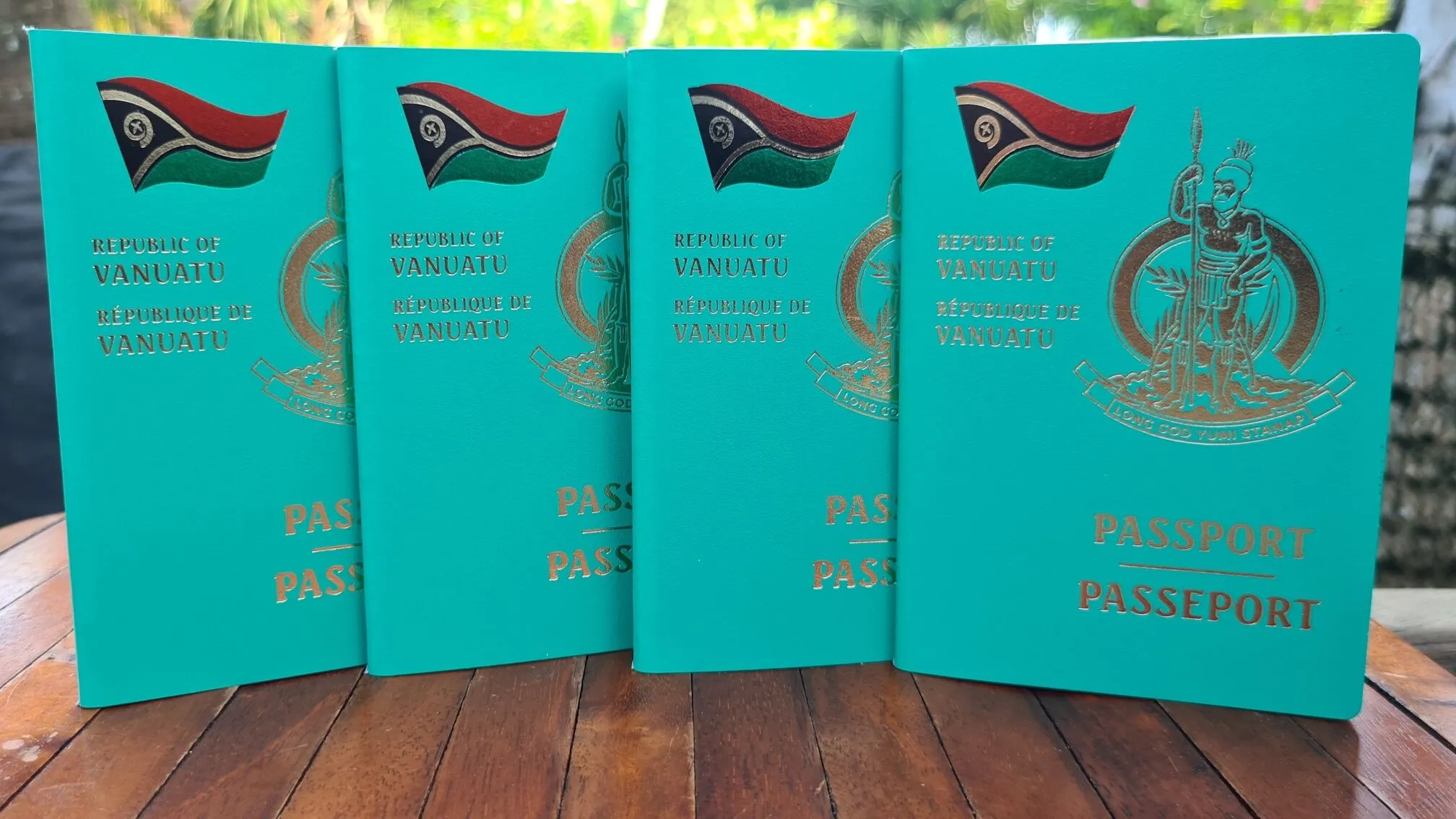
Around one month after you complete the oath. The Commission processes your citizenship certificate first, then forwards your details to passport issuance. Passports ship to your Turkey address via secure courier arranged by your agent.
Budget an extra week or two if you want expedited delivery or if customs delays the passport's entry into Turkey. The passport itself is biometric and valid for ten years from issue.
A Vanuatu passport opens doors to roughly 90 countries and territories visa-free or visa-on-arrival. For Turkish citizens, that's meaningful—you gain access to regions your Turkish passport alone doesn't unlock, especially Southeast Asia, the Caribbean, and parts of Latin America. Singapore, Hong Kong, Malaysia, and several Pacific Island nations all welcome Vanuatu passport holders more readily than Turkish ones.
But here's the catch: Vanuatu passports don't work for the Schengen Area or the UK. The EU suspended visa-free entry for Vanuatu citizens over security concerns tied to the DSP, and the UK followed suit. Turkish citizens already need visas for Schengen and UK travel, so adding Vanuatu citizenship doesn't change that reality—you'll still be applying for Schengen and UK visas with either passport.
Vanuatu charges zero income tax, zero capital gains tax, zero wealth tax, zero inheritance tax. Turkish citizens who establish tax residency in Vanuatu (or use the citizenship as part of a wider international tax strategy) may lower their overall tax load—though this hinges on Turkey's tax residency rules and applicable tax treaties. Talk to a tax advisor before you make citizenship decisions based on tax alone.
No residency requirement means you hold Vanuatu citizenship while living and working in Turkey or anywhere else. You don't visit Vanuatu, own property there, or maintain ties. Business owners, investors, and professionals who want a second passport without uprooting find this invaluable.
Bring your family in one application. Spouses, dependent children under 18, adult children 18–25 who study full-time or depend financially, and parents over 65 who depend on you financially can all gain Vanuatu citizenship together. One transaction, entire family coverage.
Unlike European programs, there's no language test, no history exam, no integration requirements. You don't learn Bislama, French, or English. You don't prove you know Vanuatu's government or culture. The oath is a formality, not a trial.
The biggest drawback: no Schengen or UK access. Turkish passport holders already face that barrier, so a second Vanuatu passport doesn't worsen your situation—but it doesn't fix it either. If you were hoping to sidestep EU visa requirements, Vanuatu won't deliver.
Vanuatu's consular network is tiny. The country has only a handful of embassies and honorary consulates worldwide. Travel on a Vanuatu passport abroad and hit legal trouble, a medical emergency, or lose your passport? You'll have limited consular backup. Keep your Turkish passport with you—it's your safety net.
The $130,000 contribution is gone for good. Due diligence screening reveals a criminal record, false statements, or money laundering ties? The Commission denies your application, and you forfeit the $5,000 due diligence fee. Rarely, denial comes after you've paid the full amount—in that case, you lose $130,000 as well.
Turkey allows dual citizenship, so acquiring Vanuatu nationality won't strip you of Turkish status. Still, consult a Turkish immigration attorney about your specific situation. Certain acts—military service in a foreign country, holding certain foreign government positions—can complicate dual citizenship status under Turkish law.
The DSP has drawn international criticism for weak due diligence, triggering EU and UK visa suspensions. Some financial institutions and immigration authorities now view Vanuatu passports with suspicion, which can create banking friction or complicate visa applications elsewhere. Weigh the reputational cost of holding a citizenship-by-investment passport from a jurisdiction facing that kind of scrutiny.
Yes. Turkish law permits you to acquire foreign citizenship without losing Turkish nationality. There's no forced renunciation, no automatic forfeiture triggered by investment programs like the DSP.
When you travel internationally using your Vanuatu passport, notify Turkish authorities. Turkey requires its citizens to enter and exit the country using their Turkish passport, even if they hold another. Ignore this rule and you risk administrative headaches at border control.
No. Acquiring Vanuatu citizenship does not trigger automatic loss of Turkish status under Turkish nationality law. You keep all rights and obligations tied to Turkish citizenship—voting rights, military service obligations (where applicable), and consular access abroad.
Tax residency and citizenship are separate legal concepts. A Turkish citizen who spends more than six months per year in Turkey remains a Turkish tax resident—period. Acquiring a Vanuatu passport doesn't change that. Unless you physically move and establish tax residency elsewhere under a relevant treaty, your tax obligations follow you regardless of which passports you hold.
This article is published by an independent law firm for informational purposes only and does not represent or claim affiliation with any government body, international organization, or official authority.
Yes. The entire process happens remotely. Documents go through an authorized DSP agent, fees transfer via international bank wire, and you take the oath of allegiance on video. Your passport arrives by courier in Turkey. Some applicants visit afterward for personal or business reasons, but it's not required to obtain citizenship.
Citizenship granted through the Development Support Programme is permanent. Once the Citizenship Commission issues your certificate, you're a Vanuatu citizen for life—unless you voluntarily renounce it or the government revokes it due to fraud discovered later. The physical passport expires after ten years and needs renewal like any other travel document, but your citizenship status never expires and carries no ongoing fees or maintenance requirements.
Turkey requires either a $400,000+ real estate purchase or a $500,000 bank deposit held for three years minimum. Vanuatu's program costs $130,000 as a non-refundable contribution with no holding period. Speed matters here: Vanuatu takes 1–2 months versus 6–12 months for Turkey. The tradeoff is capital recovery. Turkish property investors can eventually sell and recover their $400,000; Vanuatu applicants never see that $130,000 again. If you're locking up half a million dollars for years, that opportunity cost is real—compare it against Vanuatu's upfront, permanent expense.
Timing of denial matters. If the Internal Screening Committee rejects your application during due diligence (before you pay the full amount), you lose the $5,000 screening fee only—the $130,000 contribution is never charged. If denial comes after full payment, which is extremely rare since the Commission approves in principle first, the $130,000 is gone. Criminal records, false statements, and unverified funds sources are typical rejection reasons. Applications rejected for incomplete paperwork sometimes get a chance to correct and resubmit, though you may face a second due diligence fee.
An authorized DSP agent is mandatory—Vanuatu requires all applications flow through government-licensed intermediaries. A separate lawyer isn't legally required, but many applicants hire one anyway. Why? To verify that your source-of-funds documentation will survive scrutiny, ensure your certificates are properly apostilled and legalized, and navigate dual citizenship and tax consequences in Turkey. When selecting an authorized agent, ask for references from previous Turkish applicants and confirm they understand Turkish documentation standards.
Turkish citizens can complete the Vanuatu citizenship process in approximately 1-2 months and receive a second passport providing visa-free access to 90+ countries, with zero residency requirements and a total investment of approximately $135,500 for a single applicant.
General information only, not legal advice. Visa and programme rules change; confirm current details before deciding. Last verified 29 June 2026.
Honest, no-obligation assessment from our licensed citizenship lawyers.
Get my free assessment →