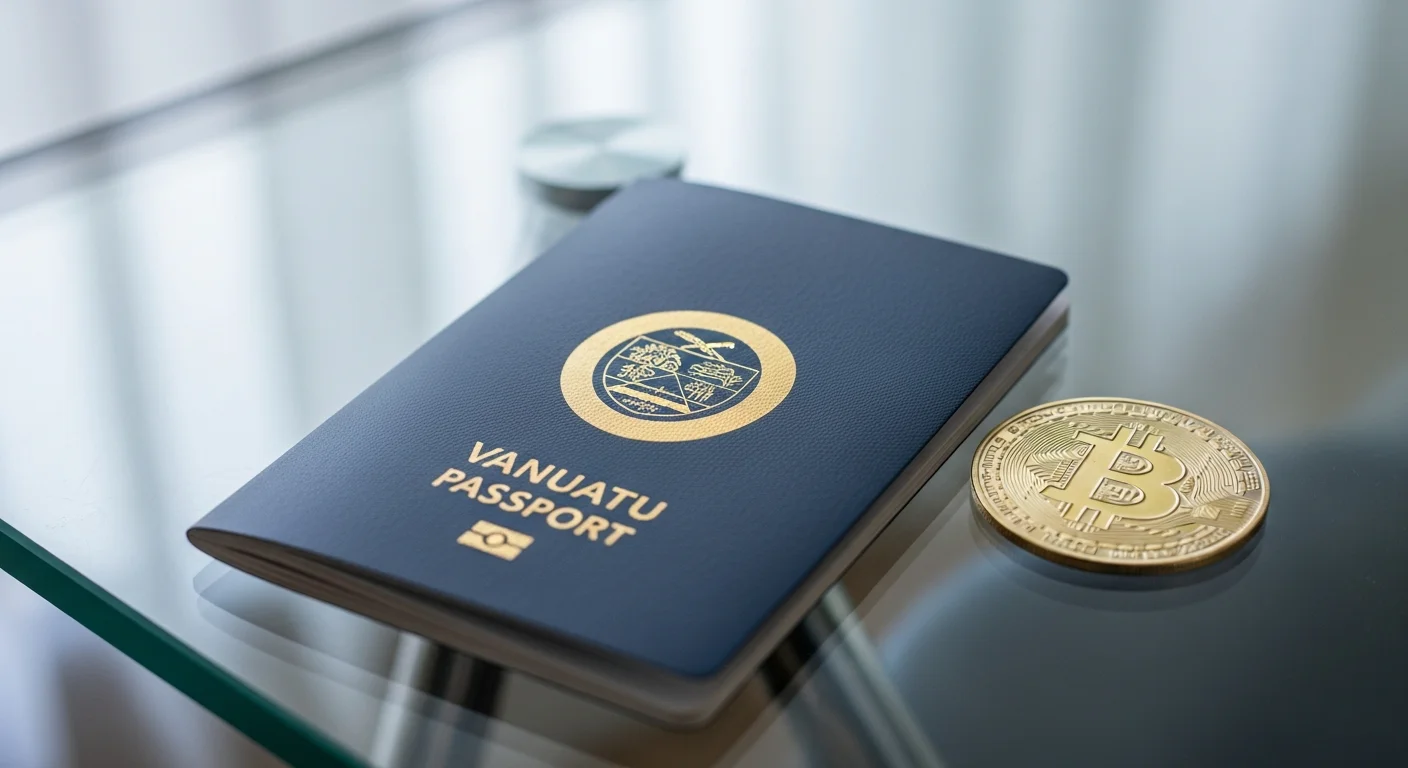
A Canadian tech entrepreneur received his Vanuatu passport in February 2026 and moved his consulting income offshore, expecting zero tax on $400,000 in annual revenue. Six months later, the Canada Revenue Agency issued a reassessment for unpaid tax on worldwide income—his Vanuatu citizenship had not changed his Canadian tax residency. His accountant had 90 days to restructure his presence and demonstrate non-residency or face a penalty of 12% on the undeclared amount.
Vanuatu imposes 0% personal income tax, 0% capital gains tax, 0% inheritance tax, and 0% wealth tax on individuals who are not tax residents of Vanuatu. But here's the critical gap: obtaining Vanuatu citizenship through the Citizenship by Investment program does not automatically make you a Vanuatu tax resident or exempt you from tax obligations in your home country. Tax residency is determined by physical presence (fewer than 183 days per year in Vanuatu qualifies you as a non-resident) and by the tax laws of your country of domicile or habitual residence. This distinction matters enormously—it's the reason the entrepreneur in the opening scenario still owed Canadian tax despite holding a Vanuatu passport.
Vanuatu Citizenship by Investment – an economic citizenship program launched in 2017 under the Development Support Program (DSP) and the Citizenship Investment Immigration Plan (CIIP), granting full Vanuatu citizenship and passport to approved applicants without residency requirements, physical relocation, or interviews, in exchange for a government contribution starting at $130,000 USD.
Two primary routes exist: the Development Support Program (DSP) and the Citizenship Investment Immigration Plan (CIIP). The DSP requires a $130,000 government contribution plus approximately $5,500 in due diligence and processing fees—about $135,500 total. The CIIP demands $100,000 non-refundable and $50,000 refundable (returned after four to five years), reducing long-term net cost to roughly $73,300 to $83,300 with fees. Both grant full citizenship and passport within 60 to 90 days, entirely remotely, with no interviews or relocation required. For families of four, expect $229,200 to $244,200 under DSP, according to Global Law Experts' 2026 program guide.
Now, the tax picture. Vanuatu itself imposes no personal income tax on anyone. Individuals earning up to 750,000 vatu (roughly $6,000 USD annually) are explicitly exempt, and nothing changes above that threshold—the rate stays at 0.00%. Capital gains, estate transfers, gifts, wealth: all zero-taxed. Yet here's what trips up most applicants: Vanuatu's zero-tax policy only applies within Vanuatu's borders. Tax residency is a separate legal status determined by your country of citizenship, domicile, and habitual residence. That passport you bought? It doesn't sever your tax ties elsewhere. Not automatically, anyway.
Yes and no. Vanuatu itself taxes nothing: no personal income, no capital gains, no inheritance, no wealth. Foreign-sourced earnings—dividends, royalties, capital appreciation on overseas assets—are all untouched by Vanuatu's tax authority for non-residents. The 2020 Vanuatu tax laws confirm that all personal income tax remains at 0.00%. That's genuine.
What's not genuine is the phrase "tax-free for me." That only applies to Vanuatu. US citizens face worldwide taxation from the IRS no matter where they live or which passports they hold. Canadians, Australians, and UK residents are taxed based on residence and domicile. Obtaining Vanuatu citizenship doesn't change your tax residency status in these jurisdictions unless you also sever ties—stop living there, formally deregister your domicile, spend fewer days than the threshold requires, and establish residency elsewhere. The entrepreneur in the opening scenario did none of that. He kept his Canadian address, his Canadian business contacts, his Canadian bank accounts. In the CRA's eyes, he remained a Canadian tax resident. The Vanuatu passport was ornamental.
Non-residents—those spending fewer than 183 days per year physically in Vanuatu—are exempt from income tax on all foreign-sourced income. Employment earned abroad, dividends, capital gains on overseas assets, royalties, passive returns: Vanuatu touches none of it. Vanuatu uses source-based taxation: only income arising from sources inside Vanuatu (local business, rental property in-country, wages for work performed there) faces any potential local levy. According to Stanford Knight's 2026 analysis, foreign-sourced income, winnings, and international capital gains escape Vanuatu taxation entirely for non-residents.
One advantage stands out: Vanuatu enforces no minimum stay. Unlike Portugal's or Spain's residency programs, you need not visit the country even once after receiving citizenship. The 183-day threshold applies only if you want to ensure non-resident status for tax purposes. Stay away entirely, stay under the limit, or stay longer—each choice carries different tax implications, but citizenship itself carries no maintenance requirement.
Realistically? No. The United States taxes worldwide income of citizens and green card holders regardless of residence, domicile, or second citizenship. Vanuatu citizenship changes nothing. You still file Form 1040, report foreign accounts on FinCEN Form 114 (FBAR), and disclose foreign financial assets under FATCA. No tax treaty exists between the US and Vanuatu. If you're a US citizen, you owe US tax on your worldwide income above the Foreign Earned Income Exclusion threshold of $126,500 (2026) even though Vanuatu imposes zero tax. There's no foreign tax to credit because Vanuatu collects nothing. Vanuatu citizenship offers no US tax relief whatsoever.
Renouncing US citizenship is the only legal exit. Renunciation triggers the expatriation tax regime under IRC Section 877A: an exit tax on unrealized capital gains exceeding $821,000 (2026 threshold) plus taxes on deferred compensation and trust distributions. If you're a US citizen weighing Vanuatu citizenship for tax planning, consult a licensed US tax attorney first. Citizenship acquisition alone reduces nothing.
Foreign-sourced income covers earnings and gains derived from outside Vanuatu: employment earned abroad, consulting fees, director compensation from foreign companies, dividends and interest from foreign banks, capital gains on sales of overseas stocks or property, royalties from internationally licensed intellectual property, and business profits from companies registered and operating abroad. Vanuatu taxes none of these for non-residents. By contrast, Vancis Capital's 2026 tax analysis notes that Vanuatu applies source-based taxation exclusively to domestic income.

Locally-sourced income triggers different rules: rental income from Vanuatu property, profits from a business registered and operating in-country, wages paid by a Vanuatu employer, and proceeds from the sale of Vanuatu real estate. While Vanuatu has no personal income tax, corporate entities may face specific reporting or withholding obligations on certain local activities. Imported goods and services incur a 12.5% Value Added Tax (VAT). Specific transactions may trigger government fees or levies. The Inland Revenue Department doesn't tax personal income, but it does collect through other mechanisms.
Non-resident individuals pay zero tax on: personal income earned abroad (wages, salaries, self-employment), capital gains (profits from overseas sales), dividends and interest from foreign sources, royalties and licensing fees from international intellectual property, inheritance and estate transfers, gifts, and wealth holdings. These exemptions are codified in Vanuatu's 1 January 2020 tax laws and remain in force through mid-2026.
Vanuatu levies a 12.5% Value Added Tax on imported and domestically-sold goods and services. It's a consumption tax, collected at the point of sale—paid by the end consumer, not by businesses on their income. Foreign income earned by non-residents (those spending fewer than 183 days per year in-country) faces zero personal tax liability. Locally-sourced business income may trigger corporate tax or withholding obligations, but Vanuatu imposes no capital export tax, donation tax, or withholding tax on outbound payments to non-residents.
"Vanuatu imposes 0% personal income tax, 0% capital gains tax, 0% inheritance tax, 0% wealth tax, and 0% corporate tax on individuals—all listed tax categories remain at a rate of 0.00% as of 2026." — Vanuatu Citizenship by Investment, 2020 Tax Laws
| Tax Category | Vanuatu Rate (Non-Resident) | Notes |
|---|---|---|
| Personal Income Tax | 0% | No tax on foreign-sourced wages, consulting, or business income |
| Capital Gains Tax | 0% | No tax on sale of foreign stocks, real estate, or assets |
| Dividend & Interest Tax | 0% | No withholding on foreign dividends or interest income |
| Inheritance Tax | 0% | No estate or inheritance tax on assets transferred to heirs |
| Wealth Tax | 0% | No annual tax on net worth or asset holdings |
| Gift Tax | 0% | No tax on gifts or wealth transfers during lifetime |
| VAT (Consumption Tax) | 12.5% | Applied to goods and services consumed in Vanuatu only |
No capital gains tax in Vanuatu—period. Whether you're a resident or non-resident, selling foreign stocks, overseas real estate, or any other capital asset produces zero tax liability at home. But here's the catch: the country where your asset sits will almost certainly tax you. Sell US real estate, and you'll owe US federal capital gains tax (plus state tax). Sell UK shares as a UK tax resident, and the UK gets its cut. Vanuatu citizenship doesn't shield you from foreign taxes—it just means Vanuatu won't pile on a second layer of taxation.
Your actual capital gains tax exposure depends entirely on where you're tax resident. If Canada, Australia, or Germany considers you a resident, those countries tax your worldwide gains regardless of your passport. The path to legally reducing capital gains tax requires establishing genuine tax residency in a zero-tax or territorial-tax jurisdiction and properly severing ties with high-tax countries—a process that demands careful planning and thorough compliance with exit requirements.
Applications flow through a licensed agent to the Vanuatu Citizenship Commission under the Citizenship Act and Development Support Program regulations. Two main tracks exist. The Development Support Program (DSP) charges $130,000 for a single applicant; the Citizenship Investment Immigration Plan (CIIP) requires $100,000 non-refundable plus a $50,000 refundable pledge. Add $5,000 due diligence fees, $800 processing, and $17,000 to $30,000 in agent and legal costs, and a solo applicant pays between $152,800 and $165,800 under DSP as of mid-2026. Families of four see costs in the $229,200 to $244,200 range.
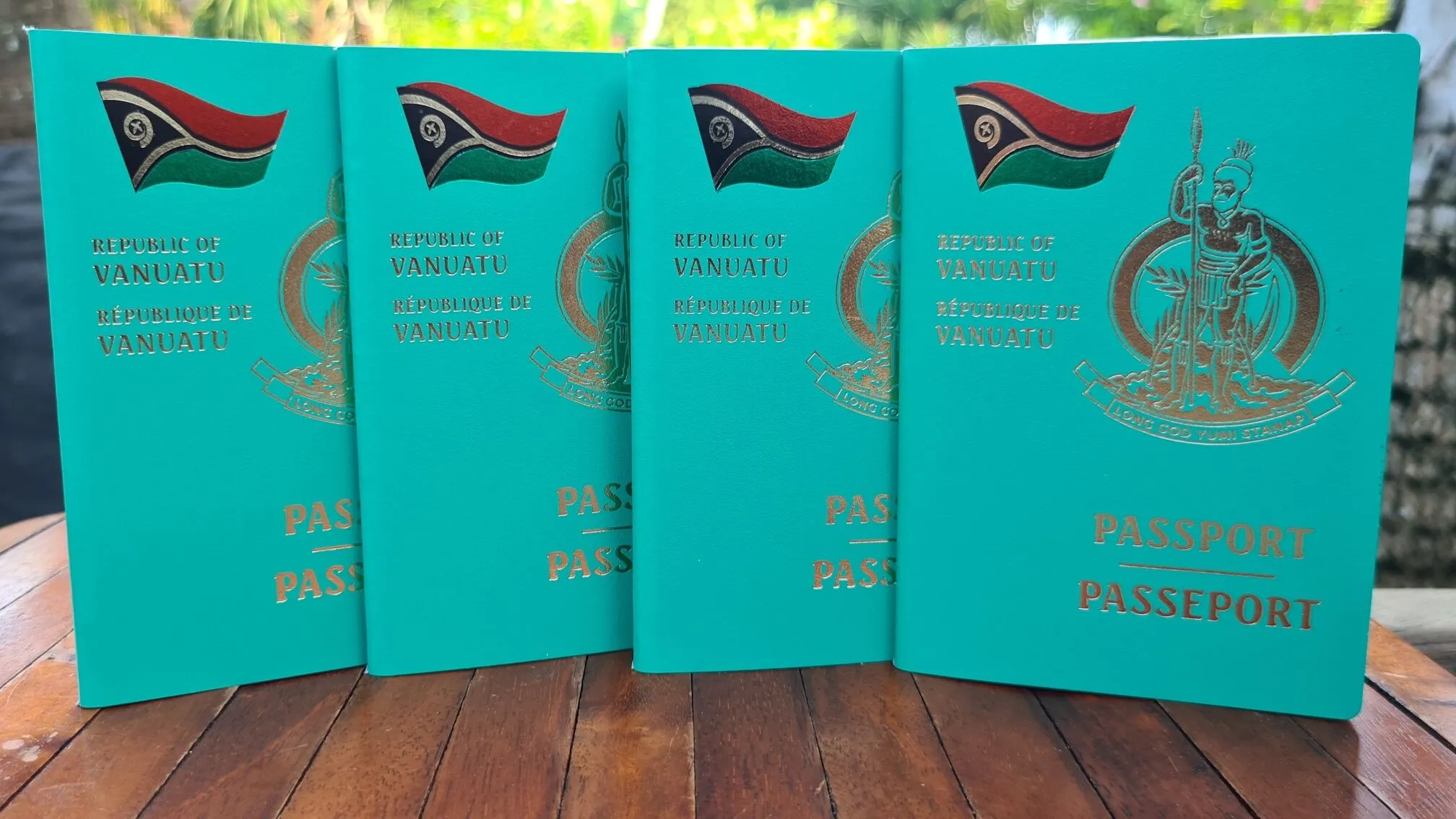
Next comes due diligence: international firms conduct background checks, verify fund sources, clear criminal records, and the Vanuatu Financial Intelligence Unit reviews everything. Expect approval within 60 to 90 days—no interview, no language test, no travel to Vanuatu required. Once approved, you receive a Certificate of Naturalization and a 10-year Vanuatu passport (renewable indefinitely). Citizenship passes to children by descent and lasts for life. Vanuatu allows dual citizenship unless your current country forbids it.
For one person under DSP: approximately $135,500 base ($130,000 government + $5,000 due diligence + $500 admin), then $17,000 to $30,000 in agent fees brings the real total to $152,500 to $165,500. The CIIP route costs $193,300 upfront but refunds $50,000 after four to five years, netting out to $73,300 to $83,300. Adding a spouse runs roughly $50,000; each child under 18 adds $25,000. All payments go through regulated financial institutions in US dollars or equivalent, and source-of-funds documentation is non-negotiable.
Agent fees vary: some charge flat rates, others take a percentage cut. Due diligence fees are per person and non-refundable, paid directly to Vanuatu's government.
Start with a current passport (at least six months valid), birth certificate, marriage certificate if applicable, and police clearance from your country of residence plus any place you've lived longer than 12 months in the past decade. You'll need proof of where your money came from—bank statements, tax returns, asset sale agreements, business records. Complete the application form, get it signed and notarized, and if anything isn't in English, hire a certified translator. The Commission may ask for more: educational certificates, employment letters, business docs, character affidavit. Incomplete applications get sent back unprocessed. False information means automatic rejection and potential permanent blacklisting. Document prep typically takes two to four weeks.
Spend fewer than 183 days in Vanuatu per calendar year, and you're a non-resident for tax purposes. Physical presence is what counts—if you're there at midnight, the full day counts. The Inland Revenue Department tracks this against immigration records. Cross 183 days, and you become tax resident that year (though foreign income stays untaxed even for residents). If you earn rental income from Vanuatu property or run a local business, you may file a return on that income, but foreign earnings remain completely off the radar. Non-residents with no Vanuatu-sourced income file nothing.

Here's what trips up most people: obtaining a second passport doesn't automatically establish tax residency anywhere. Tax residency turns on physical presence, domicile, and each jurisdiction's specific rules—not your passport color. If you're currently tax resident in Canada, Australia, or Germany, those countries still tax your worldwide gains until you formally exit their system and establish genuine presence elsewhere. Vanuatu offers the zero-tax jurisdiction; establishing it as your actual tax home requires meeting exit requirements in your old jurisdiction and proving real ties in the new one.
No. Non-resident citizens earning only foreign income file nothing in Vanuatu—there's no income tax to collect from them. If you take rental income from Vanuatu property or run a registered local business, a return may be required on that specific income. The 12.5% VAT applies to sales and consumption, collected at checkout, not through annual filings.
If you hold dual citizenship and are a tax resident of another country—the UK, Canada, Australia, or elsewhere—you must continue filing annual tax returns there and report worldwide income. Vanuatu has no income tax to enforce, so the real constraint is your home country's rules, not Vanuatu's. Vanuatu does not exchange tax information under bilateral tax treaties (it has 19 of them, but they don't override domestic filing obligations). However, Vanuatu signed the Common Reporting Standard in 2019, which means foreign banks report your account balances to the Vanuatu Inland Revenue Department, which then shares that data with your home tax authority under CRS.
In 2019, Vanuatu signed the Common Reporting Standard agreement and began automatic exchange of financial account information in 2020. Under CRS, banks and financial institutions in Vanuatu report account balances, interest, dividends, and sales proceeds to the Vanuatu Inland Revenue Department for accounts held by tax residents of other CRS member countries. That information is then shared annually with the tax authorities of those countries.
Here's what this means practically: If you are a tax resident of the UK, Germany, Canada, or another CRS jurisdiction and hold a bank account in Vanuatu, your account details land on your home tax authority's desk every year. The UK's HMRC receives them. So does the Canadian Revenue Agency. Vanuatu citizenship alone does not change your reporting classification—CRS classification is based on tax residency, not nationality.
The United States operates differently. It is not a CRS member but enforces the Foreign Account Tax Compliance Act (FATCA), which requires foreign financial institutions worldwide to report accounts held by US citizens and green card holders to the IRS. Vanuatu banks comply with FATCA. If you hold US citizenship and a Vanuatu bank account, that account is reported to the IRS annually.
US citizens face additional reporting obligations. You must file FinCEN Form 114 (FBAR) if the aggregate value of foreign financial accounts exceeds $10,000 at any point during the calendar year. Form 8938 (Statement of Specified Foreign Financial Assets) is required if foreign assets exceed threshold amounts. Miss these filings and the penalties are severe: up to $10,000 per violation civilly, or 50% of the account balance for willful violations, plus potential criminal prosecution.
No.
FATCA applies to all US citizens and green card holders regardless of where they live, which passports they hold, or where their financial accounts are located. Vanuatu citizenship does not exempt you from FATCA, FBAR, or any other US tax reporting requirement. Financial institutions in Vanuatu are FATCA-participating institutions and report accounts held by US persons to the IRS.
The only legal exit is renouncing US citizenship or relinquishing a green card—both of which trigger reporting and potential exit tax obligations under Internal Revenue Code Section 877A.

Some advisors market second citizenship as a way to "escape" FATCA or reduce IRS scrutiny. That pitch is false and legally dangerous. The IRS has access to FATCA data from over 110 countries, including Vanuatu, and it cross-references that data with tax returns, passport records, and banking information. Undisclosed foreign accounts and unreported income invite civil penalties, criminal prosecution, and potential imprisonment. Vanuatu citizenship is legitimate for global mobility and visa-free travel, but it eliminates nothing about your US tax obligations.
Yes—if you are a tax resident of a CRS member country. Under CRS, financial institutions in Vanuatu report your account balances and income to the Vanuatu Inland Revenue Department, which shares that data with your home tax authority. A UK tax resident with a Vanuatu bank account has his account activity reported annually to HMRC. A Canadian tax resident sees the same reports flow to the Canada Revenue Agency. CRS applies to tax residency, not citizenship: holding a Vanuatu passport does not exempt you from CRS reporting if you remain a tax resident elsewhere.
To avoid CRS reporting, you must change your tax residency to a jurisdiction that does not participate in CRS (very few exist as of 2026) or qualify for tax-resident status in a jurisdiction and comply with its local tax laws. Changing tax residency requires more than acquiring a passport. You must establish genuine physical presence, domicile, and economic ties in the new jurisdiction, and sever ties with your previous country of residence—deregistration, final tax filings, proof of departure. Tax authorities scrutinize changes in tax residency and may challenge them if they lack substance or appear designed solely to evade tax.
A British consultant earning £200,000 annually from remote clients relocates to Dubai and acquires Vanuatu citizenship. She spends 200 days per year in the UAE (establishing UAE tax residency), deregisters from the UK tax system, closes her UK domicile, and maintains a Vanuatu passport for visa-free travel. The UAE applies 0% personal income tax and she is no longer a UK tax resident, so her consulting income is untaxed. Her Vanuatu citizenship plays no role in her tax status—the UAE residency is what eliminates UK tax. Vanuatu citizenship simply provides a backup passport and access to visa-free destinations where her UAE residence permit is not accepted.
An Australian property investor sells an investment portfolio worth AUD 2 million, generating a capital gain of AUD 500,000. He holds Vanuatu citizenship but remains an Australian tax resident (lives in Sydney, owns property, has family ties). The Australian Taxation Office taxes the capital gain at the applicable rate (discounted if the property was held more than 12 months). Vanuatu's 0% capital gains tax does not apply because the investor is not a Vanuatu tax resident and the gain occurred in Australia.
What if he wanted to eliminate Australian capital gains tax? He would need to cease Australian tax residency before realizing the gain—spend fewer than 183 days in Australia, sever domicile, establish residency elsewhere. Acquiring Vanuatu citizenship alone does not change his Australian tax status or trigger any tax benefit from Vanuatu's zero rate.
A German entrepreneur establishes a Vanuatu holding company and relocates to Portugal under the Non-Habitual Resident (NHR) tax regime, which exempts new residents from tax on foreign-sourced income for 10 years. She maintains Vanuatu citizenship for travel and Portuguese residency for tax purposes. Dividends paid from the Vanuatu holding company to her Portuguese bank account are exempt from Portuguese tax under NHR rules and are not taxed by Vanuatu. Foreign business income flows through tax-free for 10 years—but only because of Portuguese NHR eligibility and tax residency. The Vanuatu holding company domiciled in a zero-tax jurisdiction enables the structure, and the Vanuatu citizenship provides travel flexibility, but neither generates the tax benefit alone.
| Scenario | Tax Residency | Tax Outcome on Foreign Income | Role of Vanuatu Citizenship |
|---|---|---|---|
| UK consultant relocates to UAE, acquires Vanuatu passport | UAE tax resident | 0% (UAE has no income tax; UK residency severed) | Backup passport for travel; no tax benefit |
| Australian investor remains in Sydney, holds Vanuatu passport | Australian tax resident | Taxed at Australian rates on worldwide income and capital gains | No tax benefit; Australian tax residency unchanged |
| German entrepreneur relocates to Portugal NHR, Vanuatu holding company | Portuguese tax resident (NHR) | 0% (NHR exempts foreign-sourced income for 10 years) | Vanuatu company domicile enables tax-efficient structure; passport for mobility |
| US citizen acquires Vanuatu passport, lives in Vanuatu | US tax resident (citizenship-based) | Taxed on worldwide income by IRS; FEIE exclusion up to $126,500 | No US tax benefit; IRS jurisdiction unchanged |
The pattern across these scenarios is clear: Vanuatu citizenship alone does not eliminate tax. Tax outcomes depend on where you are a tax resident, which income you earn, and whether you have severed ties with high-tax jurisdictions. Vanuatu citizenship is a tool for mobility and access to a tax-neutral environment. Tax residency—determined by physical presence, domicile, and the specific rules of each tax authority—is what drives your tax obligations.
This article is published by an independent law firm for informational purposes only and does not represent or claim affiliation with any government body, international organization, or official authority. The information provided does not constitute tax advice, legal advice, or professional services tailored to your specific circumstances. Tax laws and citizenship regulations are subject to change, and individual outcomes depend on your unique situation, tax residency, and jurisdiction. You should consult a licensed tax advisor, legal counsel, or qualified professional in your country of residence before making any decisions based on this content.
Vanuatu maintains tax treaties with 19 countries as of 2026, mainly to prevent double taxation and enable information sharing. Here's what matters: these treaties don't erase what your home country requires. If you're tax-resident somewhere with a Vanuatu treaty, you still file annual returns at home and report all worldwide income. The treaty may shield certain income types from double taxation—that's the practical benefit—but it's conditional on both countries recognizing the same income in the same year.
On the reporting side, Vanuatu isn't bound by FATCA but does comply with the Common Reporting Standard (CRS). That means your Vanuatu bank accounts automatically feed data to tax authorities in CRS member countries where you hold tax residency or citizenship.

Yes, absolutely. Vanuatu citizenship grants unlimited residency—no visa, no permit, no renewal hassle ever required. But here's the catch: you don't have to live there at all. Most citizenship-by-investment buyers never spend a single day in Vanuatu; they want the passport for visa-free travel and a tax-neutral address.
If you do stay more than 183 days yearly, you cross into tax residency. In theory this matters. In practice? Vanuatu's 0% income tax makes it irrelevant. Your wallet doesn't change either way.
Vanuatu allows dual citizenship, so getting Vanuatuan nationality doesn't force you to surrender your original one. Your original country, though—that's where problems can emerge. China, India, and the Netherlands actively reject dual citizenship and may require you to formally renounce your first passport upon acquiring a second. The UK, Canada, the US, and Australia don't care; they let you hold multiple passports without issue.
Check your current country's rules before you apply. This is non-negotiable.
Around 90 countries and territories grant visa-free or visa-on-arrival entry to Vanuatu passport holders. That number used to be higher. The European Union revoked visa-free access on 4 February 2023 (formally ending on 12 December 2024), and the UK followed suit in 2023. Both were significant losses.
What remains? Russia, Malaysia, Singapore, Hong Kong, plus most Caribbean and Pacific nations. The major gaps: Schengen Area, UK, US, Canada, and Australia all demand advance visas. If European or English-speaking country access is your goal, this passport won't deliver it.
These are entirely separate things, and the distinction matters for your wallet.
Citizenship is legal status—it gives you a nationality, a passport, and the right to live and work in Vanuatu forever. Tax residency is purely about days on the ground: spend 183+ days in Vanuatu per calendar year and you're a tax resident there.
You can be a citizen but not a tax resident (skip Vanuatu most of the year). You can be a tax resident but not a citizen (working there on a permit). A non-resident citizen pays 0% tax on foreign income anywhere. Meanwhile, if you're still a tax resident of the UK, Canada, or Australia, that country keeps taxing you until you formally leave and meet their exit requirements—Vanuatu citizenship doesn't break that tie.
Not by itself. Citizenship alone changes nothing about your tax bill. Digital nomads get taxed based on where they're actually resident—whether that's defined by physical presence, domicile, or citizenship (the US uses citizenship, for example). Grab a Vanuatu passport but keep paying taxes in a high-tax country, and nothing shifts. You're still liable for everything.
To actually benefit from Vanuatu's tax-neutral status, you'd need to become a Vanuatu tax resident while severing tax residency elsewhere. That's the move. Citizenship is just the passport part of it.
General information only, not legal advice. Visa and programme rules change; confirm current details before deciding. Last verified 29 June 2026.
Honest, no-obligation assessment from our licensed citizenship lawyers.
Get my free assessment →