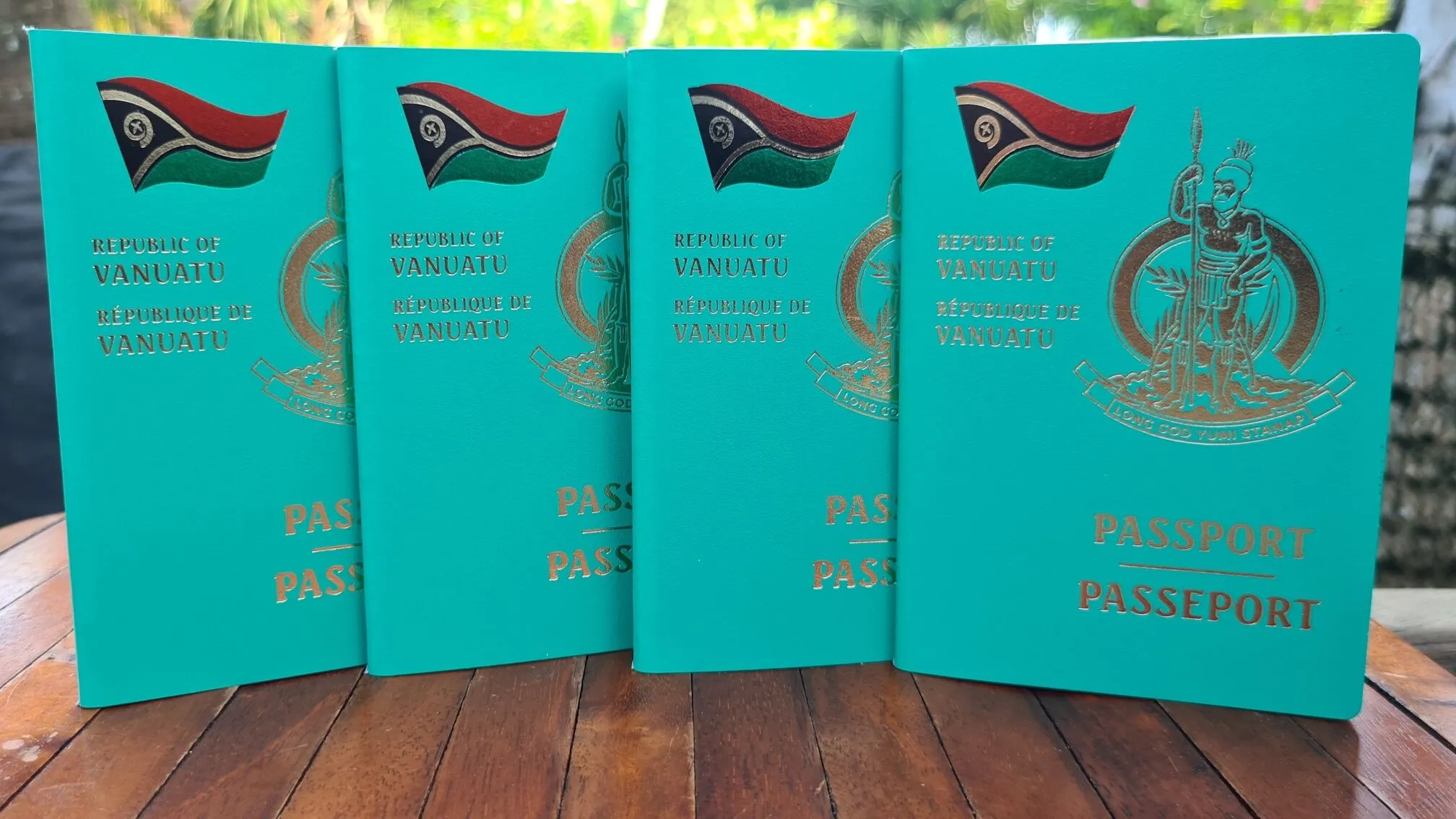
A Brazilian entrepreneur submitted his Vanuatu citizenship application in January 2026, planning to expand his e-commerce operations into Asia-Pacific markets. Forty-five days later, he received his citizenship certificate and passport—without setting foot in Vanuatu or learning a new language. His legal team had structured the investment to meet the Development Support Programme threshold while satisfying enhanced due-diligence requirements introduced in 2025.
Vanuatu citizenship through the Development Support Programme (DSP) requires a $130,000 minimum contribution and takes 30 to 90 days from complete application to citizenship issuance. No residency, language test, or visit to the country is required. The programme operates under the Citizenship Act [CAP.112] and is administered by the Vanuatu Citizenship Office under the Prime Minister's office.
Development Support Programme (DSP) – Vanuatu's official citizenship-by-investment route established under the Citizenship Act [CAP.112], allowing foreign nationals to obtain full citizenship and a passport in exchange for a non-refundable government contribution, subject to background checks and due-diligence screening conducted by the Financial Intelligence Unit.
Three routes exist: the Development Support Programme (investment-based), naturalization through residence, and citizenship by descent or marriage. For most foreign nationals without family ties to Vanuatu, the DSP is fastest. Naturalization demands at least ten years of continuous lawful residence plus demonstrated integration—including fluency in Bislama, English, or French. Citizenship by descent goes to children born to at least one Vanuatu citizen parent, regardless of birthplace.
According to the Vanuatu Citizenship Office, DSP applications dominated new citizenship grants in 2025. A critical advantage: you keep your existing nationality. The programme allows dual citizenship for nationals of countries that permit it.
You must be at least 18, hold a clean criminal record with no outstanding international arrest warrants or sanctions exposure, and prove your funds came from a legitimate, traceable source. The principal applicant contributes $130,000; spouses and dependent children add incremental amounts. All applicants face mandatory Financial Intelligence Unit due-diligence screening—this includes background checks across Interpol databases, sanctions lists, and international law enforcement records.
Medical fitness is assessed through health certificates confirming absence of infectious diseases posing public health risks. You'll need to disclose any prior criminal convictions, bankruptcy, or immigration violations anywhere in the world. Active criminal investigations or civil judgments at application time will result in rejection.
Children born to at least one Vanuatu citizen parent automatically acquire citizenship by descent—provided the birth is registered with Vanuatu authorities. Spouses of citizens may apply after two years of continuous marriage and lawful residence in Vanuatu, subject to background checks and integration assessments. Adopted children under 18 can acquire citizenship if the adoption is legally recognized under Vanuatu law and the adoptive parent holds citizenship.
Parents and grandparents aged 50 or older qualify as dependents in a DSP application if financially dependent on the principal applicant and meeting health and character requirements. This structure allows multi-generational family applications—as long as the principal applicant covers the additional $10,000 contribution per dependent.
A single applicant pays approximately $135,500 total: $130,000 government contribution plus $5,500 due-diligence fees. Family costs rise accordingly—$150,000 for a married couple, $165,000 for a couple with one child, $180,000 for a couple with two children, with an additional $10,000 per extra dependent. These figures come from the Vanuatu Citizenship Office as of mid-2026.

Beyond the base fees, expect biometric enrollment ($200–$800 if done outside Port Vila), document authentication and apostille services, and legal representation from licensed citizenship agents. Birth certificates and national ID cards—made mandatory for all applicants in July 2025—add $1,500 to $2,000 via expedited channels. You'll pay a 25 percent deposit of the total government contribution upfront with your initial application.
| Applicant Profile | DSP Contribution (USD) | Due-Diligence Fee (USD) | Total Cost (USD) |
|---|---|---|---|
| Single applicant | $130,000 | $5,500 | $135,500 |
| Married couple | $150,000 | $11,000 | $161,000 |
| Couple + 1 child | $165,000 | $16,500 | $181,500 |
| Couple + 2 children | $180,000 | $22,000 | $202,000 |
| Each additional dependent | $10,000 | $5,500 | $15,500 |
The DSP requires $130,000—non-refundable, fixed by statute, unchanging regardless of market conditions or your nationality. Unlike real-estate-based citizenship programmes elsewhere, the DSP demands no property purchase, business establishment, or job creation. Payments go to designated government accounts only; paying agents directly will disqualify your application.
Vanuatu also offers the Citizenship Investment Immigration Plan (CIIP) at $100,000 contribution plus a $50,000 refundable bond. The DSP remains more popular due to faster processing and cleaner structure, though both grant identical citizenship rights and passport benefits.
The Financial Intelligence Unit charges $5,500 per applicant for mandatory due-diligence screening—criminal background checks, sanctions database searches, and source-of-funds verification. Biometric submission (required at Port Vila, Dubai, Hong Kong, or Nouméa) may cost $200 to $800 depending on location. Document preparation—notarization, apostille, certified translations—typically runs $1,000 to $3,000.
Licensed citizenship agents charge $5,000 to $15,000 for application assembly, government liaison, and submission management. This varies with financial documentation complexity and family member count. These professional fees sit outside the $130,000 DSP contribution entirely.
Every applicant submits a valid passport (at least six months' validity remaining), original birth certificate, and police clearance certificates from every country of residence over the past ten years. Married applicants add marriage certificates; divorced applicants provide divorce decrees. Dependent children need birth certificates showing parentage; adopted children need legally recognized adoption orders.
Financial documentation proving lawful source of funds faces the most intensive scrutiny. Acceptable evidence: audited business financial statements, employment contracts and three years of payslips, bank statements showing fund accumulation, inheritance documentation with probate court records, real-estate sale agreements. All documents require apostille or consular legalization plus certified English or French translations if originally in other languages.
Since July 2025, national identity cards from your country of citizenship are mandatory. If your country doesn't issue them, submit a notarized affidavit explaining the absence. Four recent passport-sized photographs meeting International Civil Aviation Organization standards are required for each applicant.
Yes. Police clearance certificates from every country where you've lived six months or longer during the past ten years are mandatory. They must be issued within six months of submission and explicitly state whether any convictions, pending charges, or outstanding warrants exist. Countries with decentralized criminal record systems may require multiple certificates covering different regions or periods—check local requirements early, as some jurisdictions take weeks to issue them.

Anyone with prior criminal convictions must disclose everything—offense dates, court jurisdictions, sentences, and evidence of completion or pardon. Traffic violations rarely disqualify applicants. But fraud, money laundering, terrorism financing, or violent crime? Automatic rejection. The Financial Intelligence Unit cross-references your police certificate against Interpol databases and international sanctions lists during screening.
From submission of a complete application to receiving your citizenship certificate typically takes 30 to 90 days, according to the Vanuatu Citizenship Office. But this clock only starts once you've submitted all documents, paid due-diligence fees, and completed biometric enrollment. Missing documents or requests for clarification push that timeline back—sometimes weeks.
The Financial Intelligence Unit needs 30 to 45 days alone to verify your source of funds and cross-check international sanctions lists, Interpol databases, and financial crime watchlists. If your finances are complex—multiple business structures, citizenship across several countries, residence history spanning numerous jurisdictions—you're looking at longer screening. Applicants from Financial Action Task Force high-risk jurisdictions face enhanced due-diligence, which adds 2 to 4 weeks on top of the standard review.
After due-diligence clears, your application moves to ministerial review. Once approved, you take the Oath of Allegiance—administered at Vanuatu embassies, consulates, or through authorized agents. No travel to Vanuatu required. Citizenship certificates and passports ship via secure courier within 2 weeks of oath completion.
Most applicants receive citizenship between 60 and 90 days from the date their complete application reaches the Citizenship Office. Expedited processing isn't officially available, but straightforward cases—clean financial records, no criminal history, minimal red flags—sometimes clear in 30 to 45 days. The slowdowns typically happen here: incomplete police certificates, missing apostilles, or vague source-of-funds documentation.
Your licensed citizenship agent tracks your application status through direct contact with the office. No self-service online portal exists as of 2026. If they request additional documents or clarifications, you'll receive them through your agent—and you have 30 days to respond. Miss that window, and your application gets suspended or rejected.
Zero. The Development Support Programme has no residency requirements. You don't need to visit Vanuatu before, during, or after your application. No minimum stay, no property ownership mandate, no business setup required. This is where the DSP differs sharply from naturalization-based citizenship, which demands at least ten years of continuous lawful residence.
Naturalization takes a different path. You'd need to live in Vanuatu for ten years, prove you were physically present for most of that period, speak one of the official languages (Bislama, English, or French), and show you're integrated—through employment, community ties, or family connections. Spouses of Vanuatu citizens get a break: two years of marriage and continuous residence, and the ten-year requirement disappears.
Investment programme participants receive citizenship with zero residency obligation. Live anywhere. Own no property in Vanuatu. Spend zero days per year there. Passport renewals don't require you to return either.
You gain the right to live, work, and own property in Vanuatu without restriction. Your passport opens roughly 90 countries visa-free or visa-on-arrival as of mid-2026—Russia, Hong Kong, Singapore, most Commonwealth nations. But there's a catch: the EU door closed on February 4, 2023, with formal visa requirements taking effect December 12, 2024. The UK withdrew visa-free access in 2023.

Vanuatu levies zero income tax, capital gains tax, inheritance tax, or wealth tax on foreign-sourced income. That matters if you're an entrepreneur, investor, or retiree managing global assets. You don't report or remit foreign earnings to Vanuatu tax authorities. The country skips the Common Reporting Standard for automatic tax information exchange, though it does comply with Financial Action Task Force anti-money-laundering standards.
Full political rights come with citizenship—vote and run for public office once residence requirements are met under Vanuatu's Constitution. Public healthcare and education are accessible, though most investment programme participants carry private insurance and live abroad anyway. Your citizenship passes to children born after naturalization.
Yes. Vanuatu sits at the UN table, belongs to the Commonwealth, and participates in the Pacific Islands Forum. Its citizenship and passports are recognized under international law for travel, residency applications, and banking. That said, visa treatment varies—some countries require visas from Vanuatu passport holders despite recognizing the citizenship itself.
Nations permitting dual citizenship generally accept Vanuatu citizenship without demanding you renounce your original nationality. But check your home country's rules first. China and India don't recognize dual nationality and will revoke your original citizenship if you acquire another.
Yes. Vanuatu allows dual and multiple citizenships without restriction. The Citizenship Act [CAP.112] doesn't require renouncing your existing nationality, and acquiring Vanuatu citizenship won't automatically terminate it elsewhere. This applies to investment programme participants and naturalized citizens alike.
Here's the critical part: your country of origin must permit it. Nationals of countries that prohibit or restrict multiple nationalities risk legal consequences—potentially losing original citizenship—upon acquiring Vanuatu citizenship. Get legal advice from your home jurisdiction before you proceed.
"Vanuatu passport holders can travel visa-free or obtain visa-on-arrival to approximately 90 countries as of mid-2026, down from over 130 destinations prior to EU and UK policy changes in 2023–2024."
Serious criminal convictions disqualify you immediately. Fraud. Money laundering. Drug trafficking. Terrorism. Violent crime. Traffic violations typically don't bar entry, but you must disclose them anyway. Active criminal investigations, outstanding warrants, Interpol notices, or international sanctions listings mean automatic rejection.
Financial problems also block approval. Can't document lawful source of funds? Evidence linking money to criminal activity? Connections to Financial Action Task Force blacklisted entities? Denied. Asset freezes, civil forfeiture proceedings, or bankruptcy without discharge are grounds for rejection. Politically exposed persons—senior government officials, military leaders, heads of state-owned enterprises—face enhanced due-diligence and possible delays or denial.
Health screening catches active tuberculosis, untreated infectious diseases that pose public health risks, or conditions requiring substantial public healthcare resources. Mental health conditions alone don't disqualify unless they prevent you from taking the Oath or understanding your citizenship obligations. Licensed medical practitioners conduct assessments, and certificates must be issued within six months of application.

This article is published by an independent law firm for informational purposes only and does not represent or claim affiliation with any government body, international organization, or official authority.
Absolutely. The Development Support Programme operates under the Citizenship Act [CAP.112] and is administered by the Vanuatu Citizenship Office, a government agency reporting to the Prime Minister's office. Government officials process all applications. The President of Vanuatu issues citizenship certificates. The programme has run continuously since 2017 and undergoes periodic compliance reviews to meet international anti-money-laundering standards.
Yes. Bring your spouse, dependent children under 25, and financially dependent parents or grandparents aged 50 or older. Each additional dependent adds $10,000 to the government contribution, and each person undergoes separate due-diligence screening. Dependent children over 18 need to prove full-time student status or financial dependence on you.
Due-diligence fees vanish. They're non-refundable no matter the outcome. Your government contribution (the 25 percent deposit) might come back if rejection happens before funds are formally accepted, though this depends entirely on your specific case and timing. You'll receive written notice explaining why—though "explaining" can mean brief, and don't expect a detailed breakdown. Want to try again? You can reapply after fixing whatever disqualified you the first time, but you'll pay new application and due-diligence fees to do it.
No visit required. Everything happens remotely. You can submit biometrics at immigration offices in Port Vila, Dubai, Hong Kong, or Nouméa whenever it's convenient. The Oath of Allegiance—the final ceremonial step—gets administered at a Vanuatu embassy, consulate, or through an authorized agent in your country. Some people visit Vanuatu anyway during the process. That's fine, but it won't speed up your approval or passport any faster than staying home.
Yes, and it's permanent. Submit a formal declaration to the Citizenship Office, and you're done—no taking it back. Don't expect refunds. Every dollar of government contribution and fees you paid stays paid. One catch: the government will confirm you already hold (or will soon hold) another passport before they approve the renunciation. International law doesn't permit statelessness, so they won't let you become citizenship-less.
Speed matters most here. Vanuatu closes files in 30 to 90 days; most Caribbean programs drag on for 3 to 6 months. Investment minimums are steeper than Dominica ($100,000) but land in the same ballpark as Saint Lucia ($100,000 to $240,000 depending on the route). The visa-free list is shorter. You get roughly 90 countries visa-free; Antigua and Barbuda and St. Kitts and Nevis both crack 150+. EU and UK policy shifts explain much of that gap. Where Vanuatu wins: if you're building geographic reach into Asia-Pacific markets rather than staying Caribbean-focused, this program creates real diversification.
Adult passports last ten years from issue. Children under 16 get five-year passports. Renewal happens overseas through embassies or consulates—no need to return to Vanuatu or appear in person. Your citizenship itself? Valid for life unless you formally renounce it or the government revokes it due to fraud uncovered in your original application.
General information only, not legal advice. Visa and programme rules change; confirm current details before deciding. Last verified 29 June 2026.
Honest, no-obligation assessment from our licensed citizenship lawyers.
Get my free assessment →