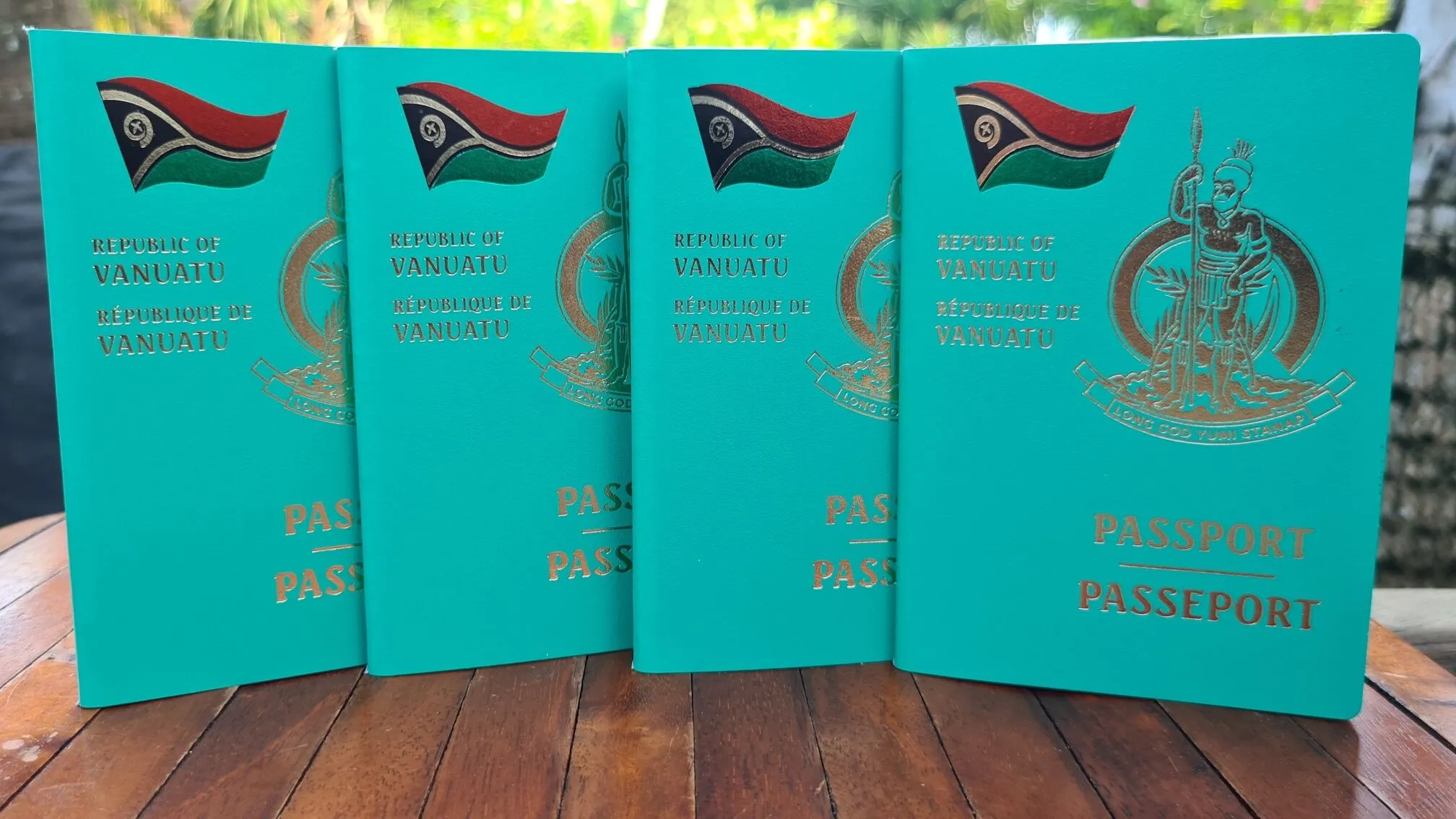
A Canadian technology entrepreneur deposited $130,000 into Vanuatu's Development Support Program in January 2026 and received his passport in 47 days. A fellow investor chose Grenada's real estate route at $220,000 and waited 82 days—but gained immediate eligibility for the US E-2 investor visa treaty, a pathway Vanuatu cannot offer.
Citizenship by Investment (CBI) – a legal process by which sovereign nations grant citizenship and a passport to foreign nationals in exchange for a qualifying economic contribution, typically through real estate purchase, government bonds, or direct contributions to national development funds, without requiring prior residency or physical presence.
Vanuatu and Grenada operate two of the world's most accessible citizenship by investment programs in 2026, but they serve fundamentally different investor profiles. Vanuatu's Development Support Program (DSP) requires a minimum $130,000 contribution with all-inclusive costs of approximately $135,500, delivers passports in 30–60 days, and imposes zero taxation on foreign income—but offers visa-free access to 93 countries excluding the Schengen Area and the United Kingdom after both jurisdictions revoked visa-free entry in 2023. Grenada's program begins at $150,000 for its National Transformation Fund or $220,000 for approved real estate, processes applications in 60–90 days, and provides visa-free access to 145+ destinations including the Schengen Area, the UK, and China—plus exclusive eligibility for the US E-2 investor visa treaty. That visa treaty matters if you're building a US-based business; without it, you're limited to L-1 or EB-5 pathways, each significantly more restrictive.
Vanuatu launched its Development Support Program in 2011 under the Citizenship Act and the Development Support Program Regulations, positioning it as the Pacific region's fastest economic citizenship pathway. Grenada established its Citizenship by Investment Act in 2013, creating a Caribbean alternative with explicit treaty advantages. The differences run deep—investment structures, approval architecture, visa mobility, regulatory rigor. Each shapes who benefits most.
On speed and process: Vanuatu's Financial Intelligence Unit and Citizenship Commission complete initial assessment in 14 business days and issue passports within 30–60 days total. Grenada employs a multi-tier vetting process involving the Citizenship by Investment Committee, Enhanced Due Diligence providers, and Cabinet-level approval, extending the timeline to 60–90 days. The extra weeks buy you something—higher international banking acceptance and stronger reputation credibility—but if your timeline is tight, Vanuatu wins decisively.
Investment routes differ materially. Vanuatu offers two primary paths: a non-refundable DSP contribution starting at $130,000 for a single applicant, or the Citizenship Investment and Innovation Program (CIIP) requiring $105,000 donation plus $50,000 redeemable investment in approved funds such as the Cocoa Sustainable Fund, with potential capital return after four to five years. Grenada provides four investment categories—National Transformation Fund contributions beginning at $150,000, approved real estate purchases from $220,000, government bonds, and approved business ventures—each with distinct holding periods and exit strategies. Real estate investors in Grenada must retain ownership for five years minimum before resale. Vanuatu's CIIP fund commitments carry similar lock-in periods; the DSP route imposes no ongoing obligations after citizenship grant.
Vanuatu's approval process prioritizes speed. The Financial Intelligence Unit conducts background checks focused on criminal records, Interpol databases, and financial sanctions lists. Applicants receive conditional approval within 14 business days, followed by oath administration via video conferencing and passport dispatch within 30–60 days total from initial submission. Due diligence fees range from $5,000 for single applicants to $5,500 for families—lower than most Caribbean competitors. The streamlined approach appeals to time-sensitive investors but has drawn scrutiny from EU authorities. In 2023, both the Schengen Area and UK revoked visa-free access, signaling regulatory concern about due diligence rigor.
Grenada implements Enhanced Due Diligence protocols aligned with OECD and FATF recommendations. Authorized agents submit applications to independent third-party due diligence firms who conduct comprehensive background investigations: source-of-funds verification, multi-jurisdictional criminal checks, business reputation analysis, political-exposure screening. The Citizenship by Investment Committee reviews each case before forwarding to Cabinet for final approval. Due diligence fees start at approximately $5,000 per main applicant and $5,000 per dependent over age 17. This rigor has preserved Grenada's visa-free access to Schengen, UK, and China throughout 2024–2026 and strengthened its standing with correspondent banks.
Vanuatu's Development Support Program requires a $130,000 contribution for a single applicant, plus $5,000 due diligence, approximately $500 in application and processing charges, and estimated legal/agent fees of $3,000–8,000 depending on service provider. All-in: $135,500–143,500 for the fastest route. Families pay $180,000 base for two adults and two children under 18, with each additional dependent adding $15,000–20,000. The CIIP alternative structures costs differently—$105,000 donation plus $50,000 redeemable fund investment, totaling $155,000 outlay with potential partial recovery after the holding period, though liquidity and market risks apply to the redeemable component.
Grenada's National Transformation Fund pathway starts at $150,000 for a single applicant or $200,000 for a family of up to four. Due diligence fees add $5,000 per main applicant and $5,000 per dependent aged 17+, plus government processing fees of approximately $1,500, and legal/agent fees typically $5,000–10,000. Total all-in cost for a single applicant via NTF donation approximates $165,000–170,000. Real estate investment requires minimum $220,000 in government-approved resort developments, hotel projects, or luxury residential units, plus the same due diligence and processing fees, government charges of approximately 4% of property value, and legal fees for title transfer. Real estate investors should budget $245,000–265,000 total including all transaction costs and fees for the entry-level property tier. That locked capital earns real estate returns—or it doesn't—over the five-year holding period; factor projected rental income and appreciation into your math.
| Cost Component | Vanuatu DSP (Single) | Vanuatu DSP (Family of 4) | Grenada NTF (Single) | Grenada Real Estate (Single) |
|---|---|---|---|---|
| Base Investment | $130,000 | $180,000 | $150,000 | $220,000 |
| Due Diligence Fee | $5,000 | $5,500 | $5,000 | $5,000 |
| Government Processing | $500 | $500 | $1,500 | $1,500 + 4% property |
| Legal/Agent Fees | $3,000–8,000 | $5,000–10,000 | $5,000–10,000 | $8,000–15,000 |
| Total Approximate Cost | $138,500–143,500 | $191,000–196,000 | $161,500–166,500 | $243,300–250,300 |
| Processing Timeline | 30–60 days | 30–60 days | 60–90 days | 60–90 days |
Vanuatu citizenship under the DSP route carries zero renewal requirements. The passport issued remains valid for ten years for adults and five years for minors under 16, with standard renewal fees of approximately $150–200 applying only at expiration—the same cost any Vanuatu citizen would pay. No ongoing contributions, maintenance fees, or residency compliance obligations exist after grant. This one-time structure appeals to passive investors seeking permanent second citizenship without administrative overhead. However, Vanuatu imposes an annual Honorary Citizenship renewal fee of approximately $200 starting from year six, a detail confirmed in official program guidelines updated January 2025 but often overlooked in promotional materials. Budget accordingly if you hold the citizenship long-term.
Grenada citizenship likewise requires no ongoing contributions or residency maintenance. Passports issued to naturalized citizens remain valid for five years and renew at standard government rates of $150–300, identical to native-born citizens. Real estate investors must retain ownership for five years minimum before selling approved property without jeopardizing citizenship status—capital is locked. After five years, resale proceeds entirely to the investor with no government clawback. Both jurisdictions permit intergenerational citizenship transfer. Children born to CBI passport holders after citizenship grant automatically acquire citizenship by descent, creating permanent lineage benefit extending beyond the initial investor.
Visa mobility is the most significant functional difference between Vanuatu and Grenada passports in 2026. Grenada passport holders access 145+ countries and territories visa-free or via visa-on-arrival. This includes the entire Schengen Area (26 European countries), the United Kingdom, China (30-day visa-free since 2024), Singapore, Hong Kong, and most Commonwealth nations. For business travelers, consultants, and families with European ties, the Schengen privilege is invaluable: 90 days within any 180-day period across Austria, Belgium, Czech Republic, Denmark, Estonia, Finland, France, Germany, Greece, Hungary, Iceland, Italy, Latvia, Lithuania, Luxembourg, Malta, Netherlands, Norway, Poland, Portugal, Slovakia, Slovenia, Spain, Sweden, and Switzerland.
Vanuatu passport holders currently access 93 countries and territories visa-free or via visa-on-arrival—Russia (90 days), Hong Kong (90 days), Singapore (30 days), Malaysia (30 days), Indonesia (30 days), the Philippines (30 days), plus most Pacific and Caribbean nations. But here's what changed: Vanuatu passports no longer grant visa-free access to the Schengen Area or the United Kingdom. The European Union revoked the privilege in April 2023; the UK Home Office followed in September 2023. Both cited due diligence concerns and security risks tied to visa-free CBI programs generally. Now Vanuatu citizens must apply for Schengen visas through embassies or consulates—a 15–30 day process costing roughly €80 per application. This eliminates the spontaneous travel flexibility that made the program attractive to European-focused investors before 2023.
Grenada remains the only Caribbean CBI jurisdiction offering both Schengen visa-free access and eligibility for the US E-2 investor visa treaty, a combination no Pacific or European economic citizenship program can match in 2026.
Grenada maintains an active E-2 Treaty of Friendship, Commerce and Navigation with the United States, signed in 1986 and continuously honored. This treaty permits Grenadian citizens to apply for E-2 investor visas—allowing them to reside in and operate businesses within the United States for renewable two-year periods with no maximum duration, provided the business remains active and profitable. Spouse and unmarried children under 21 may accompany the principal investor. Spouses gain unrestricted work authorization. Investment thresholds typically range from $100,000 to $200,000 depending on business type and location. Compare that to the EB-5 immigrant investor visa minimum of $800,000–1,050,000.
One critical distinction: the E-2 visa does not grant permanent residency or citizenship. It is not an immigrant visa. What it does offer is functional residency for entrepreneurs, consultants, and business owners seeking to operate in the American market without the EB-5 investment threshold or its multi-year processing backlogs. A Grenada citizen with an E-2 visa can establish US operations, access American banking and payment processing, hire local employees, and maintain physical presence for client meetings and regulatory compliance. Vanuatu passport holders have no equivalent treaty with the United States and therefore no such pathway.
For investors whose business models depend on US market access—software development firms serving American clients, consulting practices requiring frequent client visits, e-commerce operations needing US fulfillment infrastructure, or investment advisors managing US portfolios—E-2 eligibility alone can justify Grenada's higher cost and longer timeline. The treaty status effectively converts Grenada citizenship into a business visa platform, monetizing the investment differential through operational revenue that Vanuatu citizenship cannot generate.
Vanuatu's real estate CBI pathway requires minimum investment of $180,000–250,000 in approved development projects: beachfront resort units, hotel fractional ownership, or residential villa developments on Efate (capital Port Vila) or Santo. The property market remains relatively immature compared to Caribbean destinations, with limited tourism infrastructure outside Port Vila and Luganville. Rental yields average 3–5% annually for professionally managed resort units. Yet vacancy rates fluctuate sharply based on seasonal tourism and cyclone exposure. The 2023–2024 season saw occupancy rates of 55–60% across approved CBI properties, according to Vanuatu Investment Promotion Authority data published March 2025. Resale liquidity is constrained; properties typically require 12–18 months to sell when investors exit.
Grenada's real estate investment category operates within a more developed tourism economy. Branded resort operators include Six Senses La Sagesse, Silversands Grenada, and Mount Cinnamon Resort. Approved properties span luxury resort residences, boutique hotel units, and villa developments concentrated in the southwest parishes of St. George and St. David. Minimum investment starts at $220,000 for fractional hotel ownership or condominium units, escalating to $350,000–500,000 for standalone villas. Rental yields average 4–7% for resort-managed properties, supported by Grenada's position as a year-round cruise destination and growing appeal to North American and European travelers. The five-year holding period applies before investors may resell. Resale markets function more actively than Vanuatu's—average time-to-sale approximates 8–12 months based on Grenada Real Estate Board transaction data through December 2025.
Both jurisdictions permit property resale after mandatory holding periods without citizenship revocation, but specific timing and procedural requirements apply. Vanuatu requires investors to maintain property ownership for five years from the citizenship grant date before selling to secondary buyers. After five years, investors may sell to any qualified purchaser—subsequent CBI applicants or non-program buyers—and retain full citizenship rights. No clawback fees or additional charges. The citizenship grant is irrevocable provided the investor met all initial program requirements honestly and maintained clean criminal records post-approval.
Grenada's Citizenship by Investment Act mandates a five-year holding period for approved real estate. After this period, investors may sell either to new CBI applicants (allowing buyers to satisfy their investment requirement with pre-owned approved property at potentially discounted prices) or to private buyers for personal use. The government imposes no exit fees, capital gains taxes for non-resident citizens, or citizenship maintenance charges upon sale. That said, investors must provide written notification to the Citizenship by Investment Unit at least 60 days before executing sales contracts and submit completion documentation within 30 days post-closing. This requirement was formalized in the 2024 CBI Regulations amendment to ensure program compliance records remain current.
Vanuatu's Development Support Program mandates that all applicants be between 18 and 65 years of age, possess clean criminal records with no convictions for serious offenses, and demonstrate minimum personal net worth of $250,000 through bank statements or audited financial reports. Health screenings must confirm absence of communicable diseases. Required documents: valid passport copies for all applicants, birth certificates, marriage certificates (if applicable), police clearance certificates issued within the past 12 months from all countries of residence exceeding six months in the last ten years, medical examination certificates from licensed practitioners, bank statements covering the most recent three to six months showing $250,000+ in liquid assets, and two professional or character references from attorneys, accountants, or banking officers who have known the applicant for at least two years.
Processing unfolds in three phases. Initial review and document verification takes 7–10 business days. Due diligence background checks coordinated by Vanuatu's Financial Intelligence Unit and international verification partners consume 10–20 business days. Final approval and citizenship grant follow in 5–10 business days. You'll receive a conditional approval notice approximately 14 business days after submission if all documents satisfy requirements. Upon final approval, applicants schedule video-conferenced oath ceremonies administered by the Citizenship Commission, typically within 5–7 days. Citizenship certificates issue immediately following the oath, and passports dispatch via secure courier within 3–5 business days. Total timeline from application submission to passport receipt spans 30–60 days for straightforward cases with complete documentation. Complex cases involving multi-jurisdictional background checks, financial verification across multiple countries, or requests for additional documentation can extend timelines to 10–12 weeks.
Grenada's application requirements begin with the same baseline documents—passports, birth and marriage certificates, police clearances, medical reports, financial statements, and reference letters. But the program adds significantly more rigorous source-of-funds documentation. Applicants must submit detailed explanations of wealth accumulation with supporting evidence: business ownership documentation including incorporation certificates and financial statements for the past three years, employment letters and payslips for salaried professionals, inheritance documentation with probate records or testamentary instruments, property sale records with contracts and bank transfer evidence, or investment portfolio statements demonstrating capital appreciation. Tax returns for the past five years are strongly recommended and often requested during investigations.
Enhanced Due Diligence firms contracted by Grenada's government conduct comprehensive investigations. These include global database checks (Interpol, OFAC, EU sanctions lists, UN Security Council sanctions), adverse media searches across international news sources and litigation databases, business reputation verification through industry contacts and regulatory filings, political exposure assessment for current or former government officials or their immediate family members, and cross-referencing of financial claims against public records and third-party data sources. Investigation reports submitted to the Citizenship by Investment Committee typically span 30–50 pages documenting findings across all verification categories.
From submission to passport arrival, expect this timeline: your documents get reviewed and assessed (10–15 business days), then Enhanced Due Diligence investigators dig deeper (20–35 business days). The Citizenship by Investment Committee then reviews the file and recommends approval (10–15 business days). Cabinet gives final sign-off (7–10 business days). You take the oath and receive your citizenship certificate (3–5 business days). Finally, passport production and delivery happens (5–7 business days). Clean applications complete in 60–90 days total. If investigators flag something during due diligence and request additional documentation or clarification, timelines stretch to 12–16 weeks—but outright rejections stay below 5% of all applications, per the Grenada Citizenship by Investment Unit's 2025 annual report from February 2026. Plan your business timeline accordingly: if you file in January expecting March approval, you're already banking on worst-case timing.
| Processing Phase | Vanuatu Timeline | Grenada Timeline |
|---|---|---|
| Document Review | 7–10 business days | 10–15 business days |
| Due Diligence Investigation | 10–20 business days | 20–35 business days |
| Committee/Commission Review | 5–10 business days | 10–15 business days |
| Final Approval & Oath | 5–7 business days | 10–15 business days |
| Passport Issuance | 3–5 business days | 5–7 business days |
| Total Timeline | 30–60 days | 60–90 days |
Zero residency. Neither country demands you step foot on its soil before, during, or after approval. Your agent handles application submission. Documents get verified through apostille or notarization. Your oath ceremony happens over video. From Asia, Europe, the Middle East, or the Americas—it doesn't matter. You acquire and keep citizenship without leaving your home or disrupting your business. This is investment citizenship's core draw: citizenship mobility without citizenship disruption.
Vanuatu's Development Support Program delivers one-time citizenship with no strings. After your oath and investment payment clear, you're done. No annual reporting. No residency maintenance. No periodic renewals beyond your passport expiration every ten years (five for minors). The single ongoing obligation is an Honorary Citizenship annual fee of roughly $200 beginning year six, formalized in Citizenship Office directives from January 2025. Passport renewals after that work just like they do for native Vanuatu citizens—$150–200 every ten years through Vanuatu diplomatic missions or your agent.
Grenada works the same way. Citizenship, once approved, carries no residency demands and no ongoing contribution obligations. Your passport renews every five years at standard government fees of $150–300 (matching native-born citizens). No reporting. No minimum stay. No citizenship review periods. Both countries allow dual and multiple citizenship freely—you keep your original nationality, and neither Vanuatu nor Grenada notifies your home country that you've acquired secondary citizenship unless you ask them to or bilateral information-sharing agreements require it.
Both programs let you add spouses, dependent children, and sometimes parents or siblings. Vanuatu's DSP includes spouses, children under 25 (if unmarried, studying full-time, or financially dependent), and dependent parents over 50 whom you financially support. Costs scale quickly: a family of four (two adults, two kids under 18) costs $180,000 base contribution. Each additional child adds $15,000. Each dependent parent costs $20,000. Due diligence fees pile on separately: $5,000 for you, $2,500 for your spouse, $2,000 per child aged 13–17, and $5,000 per dependent parent over 18. Two adults and two children under 13? Count on roughly $180,000 base plus $10,000 due diligence, totaling $190,000 before agent and legal fees consume another $5,000–15,000.
Grenada's National Transformation Fund includes spouses, dependent children under 30 (student status irrelevant—a genuine advantage over competitor programs), and dependent parents or grandparents over 55 from either side of the couple. Unmarried siblings under 30 qualify too. The structure differs: up to four qualifying dependents cost $200,000 flat. Additional dependents add $25,000 (children or siblings) or $50,000 (parents or grandparents). Consider two adults, one child aged 16, one child aged 22. Your math: $200,000 NTF contribution, $15,000 due diligence (three people over 17), $1,500 government fees, and $5,000–10,000 in legal fees. Total: approximately $221,500–226,500. That's substantially higher than Vanuatu for comparable family size, but the five-year passport validity and stronger international banking reputation offset cost for many applicants.
Vanuatu runs on territorial taxation: zero income tax, zero capital gains tax, zero wealth tax, zero inheritance tax, zero withholding on dividends or royalties. You pay tax only on Vanuatu-sourced income. For non-resident CBI passport holders—which is almost everyone—that means zero, unless you're running a business or earning rent from Vanuatu property. A 12.5% VAT applies to goods and services bought locally, nothing more. Vanuatu skipped the OECD Common Reporting Standard and FATCA agreements, though it joined automatic information exchange phases starting in 2023 under international pressure. Translation: your foreign bank accounts stay mostly private from Vanuatu's perspective, but other jurisdictions' banks will still report what they need to your tax authorities.
Grenada uses territorial taxation too. Non-resident citizens owe zero tax on foreign earnings, zero on international investment gains, zero on overseas inheritance. Grenada-sourced income hits graduated rates from 10–30%, but if you don't work or operate a business there, you pay nothing. Grenada signed the OECD CRS in 2017 and participates in automatic financial account exchange with 100+ countries. Your Grenadian bank accounts report to your tax residency jurisdiction every year. This transparency contradicts asset-hiding schemes but aligns with global compliance standards. Fair tradeoff.
Neither citizenship automatically makes you tax-resident in that country—you remain tax-resident where you physically live (typically 183+ days per year or where you maintain a permanent home). But banks worldwide scrutinize CBI passport holders more aggressively. Grenada's reputation and stricter Enhanced Due Diligence standards mean smoother account opening in Europe and North America compared to Vanuatu, which faced heightened KYC rejection rates after losing Schengen visa-free access in 2023. Choose Vanuatu for privacy; choose Grenada when banking convenience matters more.
Vanuatu doesn't beat Grenada across the board. Grenada doesn't beat Vanuatu across the board. Each serves different investor profiles chasing different outcomes. Your circumstances determine which wins.
Choose Vanuatu Development Support Program if you prioritize:
Choose Grenada Citizenship by Investment if you value:
The Grenada premium—roughly $25,000–80,000 higher cost plus 30–60 extra days in processing—buys materially superior mobility rights, international credibility, and US market access. Vanuatu cannot match this. Before paying the premium, calculate whether these advantages actually generate equivalent or greater value in your specific business context.
Here's where the choice becomes practical. If your business model depends on European market access, US operations, or frequent Schengen travel, Grenada justifies the higher cost. A consultant serving European clients might lose $30,000+ annually in billable time managing Schengen visa applications, hotel reservations, and travel disruptions—fully recovering Grenada's cost premium within 2–3 years through operational efficiency gains alone. Conversely, a digital entrepreneur operating remotely in Southeast Asia with no European or American business needs gains negligible benefit from Grenada's mobility advantages. For that person, Vanuatu's speed and cost make the rational choice.
This article is published by an independent law firm for informational purposes only and does not represent or claim affiliation with any government body, international organization, or official authority.
Vanuatu's Development Support Program remains the most affordable major CBI pathway globally at approximately $135,500–145,500 all-in for a single applicant. That breaks down as $130,000 government contribution, $5,000 due diligence fee, $500 processing charges, and $3,000–8,000 in legal or agent fees. Within the Caribbean, Dominica's Economic Citizenship Program undercuts this at $110,000–125,000 through its National Development Fund route—but expect 3–4 months processing versus Vanuatu's 30–60 days. Grenada occupies the mid-range at $165,000–170,000 minimum, justified by superior mobility rights and the exclusive US E-2 treaty advantage unavailable anywhere cheaper.
Vanuatu processes Development Support Program applications in 30–60 days total from submission to passport receipt. Conditional approval typically arrives within 14 business days. The sequence runs: document review (7–10 days), due diligence checks (10–20 days), final approval (5–10 days), video-conferenced oath ceremony (within 5–7 days of approval), and passport dispatch (3–5 days).
Grenada requires 60–90 days for straightforward applications. That timeline breaks down as: document review (10–15 days), comprehensive due diligence investigation (20–35 days), Committee review (10–15 days), Cabinet approval (7–10 days), oath and certificate issuance (3–5 days), and passport production (5–7 days). Complex cases with multi-jurisdictional backgrounds or additional documentation requests can stretch to 12–16 weeks, though compliant applicants rarely exceed four months.
Malta's citizenship by naturalization tops the list at approximately 187 visa-free countries as a full EU member state—but requires €750,000+ investment and 12–36 months residency, so it's not truly in the CBI category.
Within faster CBI programs, Grenada delivers 145+ visa-free destinations including Schengen Area, UK, China, Russia, Singapore, and Commonwealth nations, ranking it among the top five global CBI programs for mobility. Vanuatu provides 93 countries but critically excludes Schengen and UK access after 2023 revocations. St. Kitts and Nevis offers approximately 157 visa-free countries including Schengen and UK at higher cost ($250,000+ through the National Sustainable Growth Fund route). Antigua and Barbuda delivers similar 150+ country access at comparable pricing to Grenada but without the US E-2 treaty advantage. For investors prioritizing maximum visa-free access within a 60–90 day timeline and without residence obligations, Grenada currently delivers the strongest mobility-to-cost ratio among Caribbean programs in 2026.
No. Neither Vanuatu nor Grenada requires residency before, during, or after citizenship approval. Both permit fully remote application through authorized agents, with all documents submitted via apostilled or notarized copies and oath ceremonies conducted via video conferencing. You need never physically visit either country at any stage.
This zero-residency model extends post-approval as well—you may maintain citizenship indefinitely without ever traveling there, though passport renewals eventually require consular visits or agent coordination. That's sharply different from traditional naturalization pathways requiring 3–10 years continuous residence, and distinguishes investment migration from residence-by-investment schemes (such as Portugal's Golden Visa or Greece's Golden Residence) that grant residence permits requiring periodic physical presence but not immediate citizenship.
Yes. Both Vanuatu and Grenada permit property resale after mandatory holding periods without citizenship revocation. Vanuatu requires five years minimum property ownership from citizenship grant date before sale, after which you may sell to any qualified buyer—subsequent CBI applicants or private purchasers—and retain full citizenship rights permanently with no government clawback. Grenada imposes an identical five-year holding period for approved real estate investments, after which you may freely sell and receive full proceeds. You must provide 60 days advance written notice to the CBI Unit before executing sales contracts and 30 days post-closing documentation for compliance records. Neither jurisdiction imposes exit fees, citizenship maintenance charges upon property sale, or capital gains taxation for non-resident citizens. The citizenship grant becomes irrevocable after five years provided you satisfied all initial program requirements honestly and maintained clean criminal records post-approval. This structure allows real estate investors to recover capital after the holding period while maintaining permanent citizenship benefits.
Both Vanuatu and Grenada require comprehensive documentation packages including: valid passport copies for all applicants with at least two years remaining validity, original birth certificates for
General information only, not legal advice. Visa and programme rules change; confirm current details before deciding. Last verified 29 June 2026.
Honest, no-obligation assessment from our licensed citizenship lawyers.
Get my free assessment →